
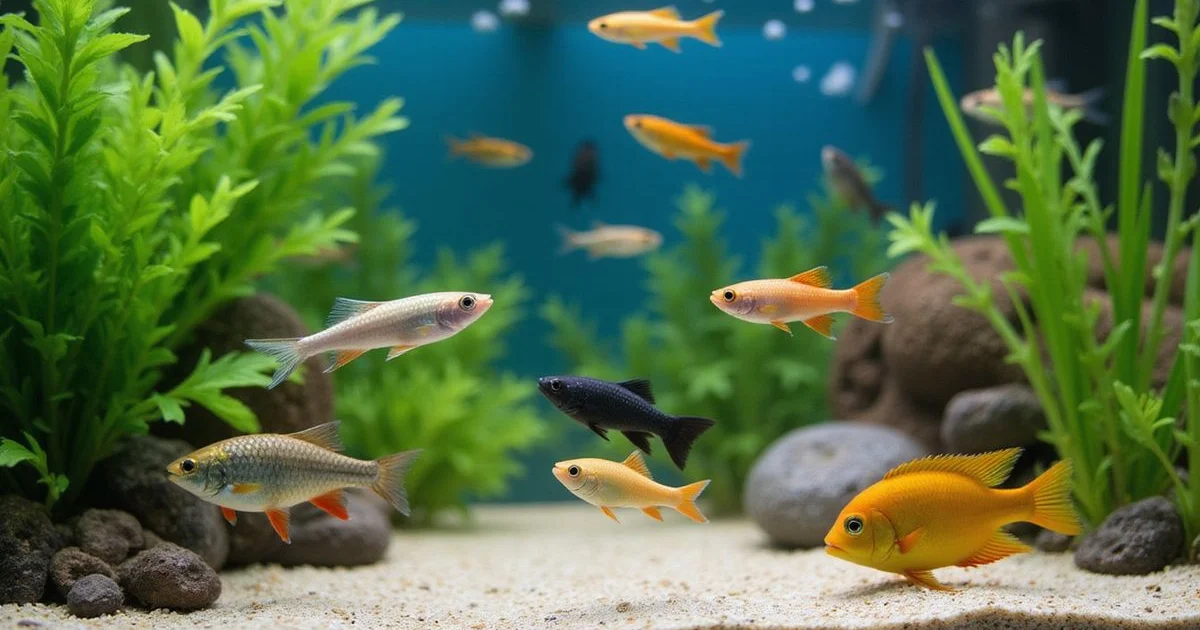
Picking tropical fish for Florida’s hard water
We constantly see local aquarists fighting against the high mineral content of our municipal tap supply. Finding the right tropical fish hard water species doesn’t have to be a struggle. Florida actually produces about 95% of the nation’s domestic ornamental fish right in our own backyard.
Those commercial farms sit just an hour away in Hillsborough and Polk counties, pulling from the exact same hard groundwater. This proximity means that most popular community fish are already adapted to local parameters.
From what we observe, simply matching the correct species to our water chemistry separates a stressful hobby from a successful one. Hardy livebearers, African Rift Lake cichlids, rainbowfish, plecos, corydoras, and captive-bred tetras thrive in this alkaline environment. Soft-water specialists like discus, wild apistogrammas, and crystal red shrimp will require dedicated RO/DI gear to survive.
Let’s look at what the local data actually tells us about our water, and then explore the exact species that will thrive in your home tank.
What tropical fish hard water actually means in Sarasota
We routinely review the latest water quality reports for Sarasota County, and the data clearly explains our unique tank conditions. The municipal supply draws directly from the Upper Floridan aquifer. This deep groundwater passes through miles of limestone, absorbing massive amounts of calcium and magnesium along the way.
Local tap water usually tests like this:
- pH: 7.6 to 8.2 (slightly alkaline)
- General hardness (GH): 12 to 20 dGH (moderate to hard, often exceeding 250 ppm)
- Carbonate hardness (KH): 8 to 15 dKH (well buffered)
- TDS: 200 to 300 ppm
This high-mineral profile provides an ideal, ready-made environment for hard water aquarium fish native to alkaline lakes and rivers. It causes severe osmotic stress for sensitive species imported from soft, acidic blackwater habitats.
We offer a fast, simple way to check your exact home parameters. Bring an 8-ounce sample to the shop for free daily testing. The team will match your specific results to a Florida freshwater tropical fish stocking plan in a few minutes.
Tropical fish hard water species that thrive in Florida
These specific groups handle our tap water without requiring any special chemical prep. Most of these fish slot straight into a standard community tank.
Livebearers
We always point beginners toward livebearers because they actively utilize the heavy mineral load in the water. They process the abundant calcium to build strong skeletons and ensure their fry develop properly. Brilliant colors show up brighter, and healthy broods drop on schedule.
Strong picks for a Sarasota tank include:
- Guppies and endlers
- Platys
- Mollies (sailfin, balloon, common)
- Swordtails
Our team highly recommends mollies for the easiest possible Sarasota hard water fish setup. They easily tolerate up to 35 parts per thousand salinity in brackish environments, making a 300 ppm tap water reading feel completely trivial. A small group of mollies in a 30-gallon tank creates a nearly foolproof starter system.
African Rift Lake cichlids
The tap water in our area essentially copies the natural chemistry of the African Great Lakes. We constantly measure Lake Malawi at a natural pH of 7.8 to 8.6, while Lake Tanganyika sits even higher at 8.5 to 9.2. Sarasota water provides the exact hard, alkaline foundation these fish evolved to need.
Reliable starter species include:
- Yellow labs (Labidochromis caeruleus)
- Rusties (Iodotropheus sprengerae)
- Acei (Pseudotropheus acei)
- Peacocks (Aulonocara species)
- Multifasciatus shellies (Tanganyika)
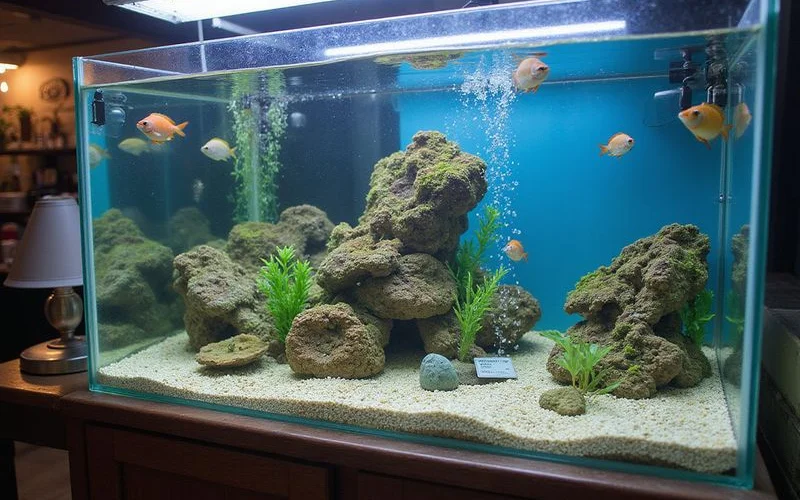
We suggest creating dense, rocky aquascapes to help manage the natural aggression of these cichlids. Stock a Malawi tank in odd numbers, aiming for six or more per species. Reviewing a community fish compatibility chart helps you skip the dangerous pairings that turn ugly fast.
Rainbowfish
Rainbowfish from New Guinea and Australia show incredible vibrancy in large, alkaline setups. We love using the popular Boesemani rainbowfish because it thrives in a General Hardness (GH) of 8 to 20, making local tap water ideal.
Strong picks for bright color:
- Boesemani rainbows
- Threadfin rainbows
- Neon dwarf rainbows
- Turquoise rainbows
Our shop frequently pairs them with peaceful, hardy tetras and bottom feeders. These active swimmers display their best colors in groups of six or more. They require strong aquarium light and plenty of open, horizontal swim space.
Hardy tetras and barbs
We strongly advise hobbyists to select captive-bred tetras over wild imports. Florida farms breed these fish for many generations, meaning they are already fully adapted to high mineral counts.
Reliable options in our water:
- Black neon, glowlight, lemon, and serpae tetras
- Congo tetras
- Captive-bred cardinal tetras (skip the wild-caught ones)
- Cherry, gold, and tiger barbs
Our customers find that tiger barbs require a dedicated school of eight or more to stop them from nipping fins. Cherry barbs remain peaceful and calm at any group size.
Plecos and corydoras
We rely on hearty bottom feeders to manage detritus in hard-water tanks. Standard bristlenose, common, and gibbiceps plecos process algae and uneaten food without any complaints about the chemistry.
Most farmed corydoras adapt beautifully to high calcium levels. The popular Bronze and Peppered corys comfortably tolerate up to 15 to 20 dGH. Panda, julii, and sterbai corydoras also settle in very well.
Pygmy and habrosus corys naturally prefer slightly softer conditions. Our staff suggests skipping these delicate species if your home tests show a General Hardness pushing past 15 dGH. A sandy substrate will protect their sensitive barbels from damage.
Gouramis
Dwarf, honey, pearl, and three-spot gouramis tolerate mineral-dense tap water nicely. They provide a calm, colorful centerpiece fish for a lively community setup.
We love how pearl gouramis shine under low to medium lighting with thick floating plants. These labyrinth fish breathe atmospheric air directly from the surface. Keeping a tight lid on your aquarium maintains a layer of warm, humid air right above the waterline.
Species that struggle (or need RO/DI)
Many hobbyists struggle when forcing soft-water species into untreated Sarasota tap water. We frequently see the extreme mineral differences cause severe osmotic stress, faded colors, and significantly shortened lifespans.
| Species | Wants | Why Florida tap fights it |
|---|---|---|
| Discus | pH 6.0-6.8, TDS under 120 ppm | Osmotic stress and slime coat issues |
| Wild Apistogramma | pH below 6.5, very soft | Will not breed, prone to disease |
| Wild cardinal tetra | Soft, acidic blackwater | Color fades, short life span |
| Crystal Red Shrimp (Caridina) | TDS 100-150, KH 0 | Fatal molting issues |
| Chocolate gourami | Soft, very warm | Sensitive to heavy mineral load |
You can absolutely keep these stunning fish in Florida. It just requires purchasing a reverse osmosis (RO/DI) unit to strip the water, plus remineralizing salts. Products like SaltyShrimp Shrimp Mineral GH/KH+ cost about $19 for a small jar, adding continuous expense and a steep learning curve.
Our experts always advise beginners to start with a natural hard-water lineup. Save the complex, soft-water dreams for your second or third aquarium project.
Easy stocking moves for a hard-water community
Every new tank owner should pick a single geographic theme and stick with it. We always warn that mixing high-pH fish with low-pH fish in the same environment guarantees that one group stays permanently stressed.
Three reliable themes for a first Florida tank:
- Livebearer community: Mollies, platys, swordtails, and a bristlenose pleco create a bright, active tank that breeds easily.
- African Rift Lake: 12 to 15 yellow labs, rusties, and acei in a 75-gallon setup provide high color and a clear pecking order.
- Hard-water community: Rainbowfish, captive-bred tetras, corydoras, and a gourami centerpiece offer a peaceful, planted-tank friendly option.
You must avoid these common mistakes:
- Do not mix African cichlids with peaceful community fish.
- Do not add discus to a hard-water tank “just to try” it out.
- Do not trust generic online stocking lists, as most assume a neutral or soft water source.
Our local water treatment process requires a specific approach to chemical conditioners. Sarasota County disinfects the supply with chloramine rather than simple chlorine. Basic dechlorinators only break the chemical bond, leaving toxic ammonia floating in the tank.
You need a complete conditioner like Seachem Prime, Fritz Complete, or Seachem Safe to bind both halves of the chloramine molecule. Reading through the guide to setting up your first freshwater aquarium will walk you through the exact timing for cycling and equipment setup.
Building your hard-water stocking list at the shop
We view Florida’s unique chemistry as a massive asset once you learn how to stock for it. Setting up a successful tropical fish hard water aquarium becomes incredibly easy with the right plan. The wrong species will fight your tank chemistry every single day, leading to frustration and expensive losses.
Stop by the shop with a fresh water sample and the rough dimensions of your tank. The team will sketch out a customized stocking list that fits your exact water chemistry, your skill level, and your budget.
Our staff invites you to browse the freshwater tropical fish room during that same visit. You can see the vast majority of these recommended species thriving right now in our healthy display tanks. Grab a water sample today, and let’s get your new aquarium started on the right foot.