
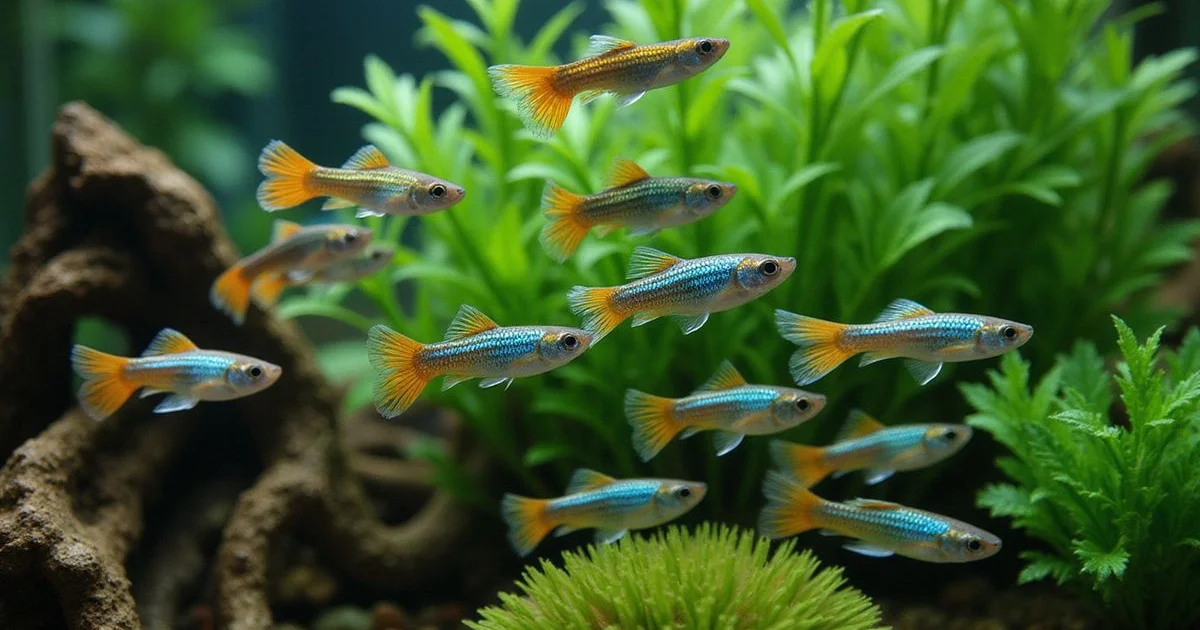
We constantly hear from local aquarium owners struggling to find the best fish for Sarasota tap water.
The secret usually lies directly in the source.
Sarasota’s municipal water supply blends groundwater from the Floridan aquifer with surface water. This creates a specific chemical profile that you have to understand before stocking a tank — once you know the parameters, our community fish compatibility chart shows which species play nice together inside that water profile.
What’s actually in Sarasota tap water
We test local tap water daily at the shop, and the results are incredibly consistent. Sarasota relies heavily on the T. Mabry Carlton Jr. Treatment Facility and blended sources from Manatee County.
This blend creates a distinct water profile that dictates exactly what can survive in your aquarium. You can see how Sarasota water hardness fish compatibility works in the chart below.
You will find these average parameters straight from the tap:
- pH: 7.6 to 8.2 (slightly alkaline)
- General hardness (GH): 12 to 20 dGH (moderate to hard)
- Carbonate hardness (KH): 8 to 15 dKH (highly buffered)
- Total Dissolved Solids (TDS): 200 to 300 ppm typically
- Chloramines: Present year-round, treated with a chlorine and ammonia bond
Our local water is hard, alkaline, and well-buffered. This profile acts as a massive advantage for livebearers and African cichlids, but soft-water specialists require extensive modification to survive.
The best fish for Sarasota tap water that thrive
These specific species actively prefer the hard, alkaline water flowing from Sarasota taps. You will experience far less disease and better coloration by matching your fish to this local environment.
We always recommend starting a new local tank with fish that naturally fit the high pH.
Livebearers and Hardy Tetras
The local water provides the exact mineral content that many Florida tropical fish farms use for proper bone growth and breeding. You will see excellent results with:
- Guppies
- Platys
- Mollies
- Swordtails
Many tetras tolerate local tap water surprisingly well. Black neon, glowlight, captive-bred cardinal tetras, serpae, lemon, and Congo tetras adapt easily. You should avoid wild-caught tetras, as they struggle with the high TDS.
Gouramis and Bottom Feeders
Gouramis thrive in moderately hard water. Dwarf, honey, pearl, and three-spot gouramis are excellent centerpiece fish for community tanks.
Bottom feeders also adapt without issue. Bristlenose, common, and gibbiceps plecos handle hard water perfectly. Most Corydoras species, including panda, julii, and sterbai, do very well. Pygmy and habrosus corydoras prefer slightly softer conditions, so monitor them closely.
Cichlids and Rainbowfish
We stock a massive variety of African Rift Lake cichlids because they are perfectly suited for Sarasota water. Mbuna and Peacock cichlids from Lake Malawi require a pH above 7.8, which the tap water delivers naturally.
Rainbowfish also display their best colors in harder water. Boesemani, threadfin, and neon dwarf rainbows are incredibly active and healthy in these parameters.
Species that struggle without RO/DI
Soft-water species require a dedicated Reverse Osmosis and Deionization (RO/DI) system to strip out local minerals before they can survive. The municipal supply contains too much calcium and carbonate for these delicate animals.
We strongly advise against putting these species in untreated tap water.
Delicate Shrimp and Wild Cichlids
Crystal Red Shrimp (Caridina species) are extremely strict about their environment. They require very specific parameters to survive:
- TDS: Between 100 and 150
- pH: Strictly below 7.0
- KH: Zero
Sarasota tap water will cause fatal molting issues for these shrimp almost immediately. Wild-caught Apistogramma species, especially blackwater varieties, also demand highly acidic water. They will become stressed and susceptible to disease in a high-pH environment.
Discus and Amazon Biotope Fish
Discus are famous for needing pristine, very soft, and acidic water. The 200 to 300 ppm TDS of the tap water places immense osmotic stress on their organs.
Most true Amazon biotope fish face the exact same problem. Captive-bred lines handle it slightly better, but wild-caught cardinal tetras will fade and perish.
If you are committed to keeping these species, an RO/DI unit is mandatory. We sell several distinct models and can demonstrate how to properly remineralize the purified water with products like SaltyShrimp before you buy.
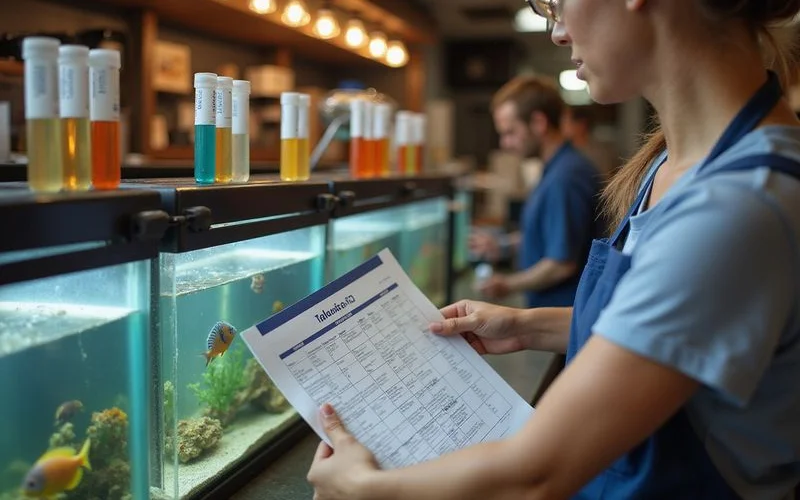
The free water test
Every neighborhood shows slight variations depending on the exact source and the age of the local pipes. Lakewood Ranch and Bradenton hobbyists routinely record different parameters than customers down in Bee Ridge or Venice.
Testing your specific tap is the only way to know exactly what you are working with.
We use precision tools like API Master Kits and Hanna Checkers to analyze your water accurately. Bring an 8-ounce sample in a clean jar to the store.
The team will test your sample on the spot for key parameters:
- pH: To measure exact acidity or alkalinity.
- Ammonia, Nitrite, Nitrate: To check your tank’s nitrogen cycle.
- GH and KH: To confirm water hardness and buffering capacity.
- Salinity: To ensure proper specific gravity for saltwater setups.
This service costs you absolutely nothing. After getting the results, the team will pick fish that precisely match your unique neighborhood water profile.
Conditioner matters
Your water conditioner must specifically neutralize chloramines to keep your fish alive. Sarasota County water treatment facilities use chloramine, a chemical bond of chlorine and ammonia, to keep pipes sanitary.
Basic dechlorinators only break the bond and neutralize the chlorine. This leaves the toxic ammonia floating in your aquarium, which causes immediate stress and potential gill burn for your fish.
We rely on premium conditioners that bind both elements safely.
| Conditioner Brand | Best Use Case | Key Benefit |
|---|---|---|
| Seachem Prime | Standard tanks (10 to 55 gallons) | Binds ammonia and nitrite for up to 48 hours. Standard dose is 5ml per 50 gallons. |
| Fritz Complete | Standard tanks (10 to 55 gallons) | Excellent alternative with a highly convenient pump dispenser. |
| Seachem Safe | Large systems (100+ gallons) | Highly concentrated dry powder form of Prime. Extremely cost-effective for big tanks. |
When to come in
Knowing your baseline water chemistry is the most critical step in building a successful aquarium. Generic internet advice completely ignores the massive difference between Bradenton tap water and Venice tap water.
We invite you to bring a water sample into the shop this week. The team will build a custom stocking list based on your exact neighborhood parameters, ensuring you go home with the best fish for Sarasota tap water.