
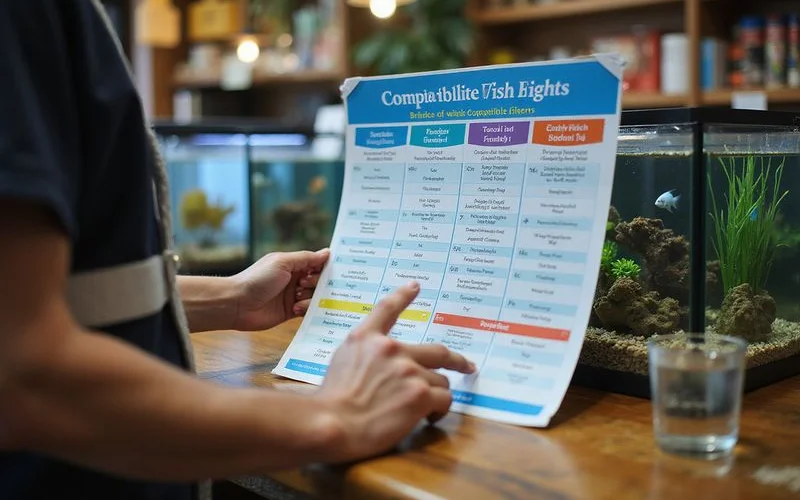
How to read this chart
We see so many beautiful aquarium setups fail simply because the fish were mismatched from the start.
Recent 2026 industry data shows that over 13.1 million US households maintain freshwater aquariums. That is a lot of people discovering that putting random fish together rarely works out well.
Our goal is to give you a clear community fish compatibility chart for combining species safely. Understanding tropical fish compatibility goes beyond simply knowing the species name. Compatibility starts with the water itself — if you have not yet read about the nitrogen cycle, even the best-matched species will struggle in an uncycled tank.
You are juggling four specific variables to create a thriving environment.
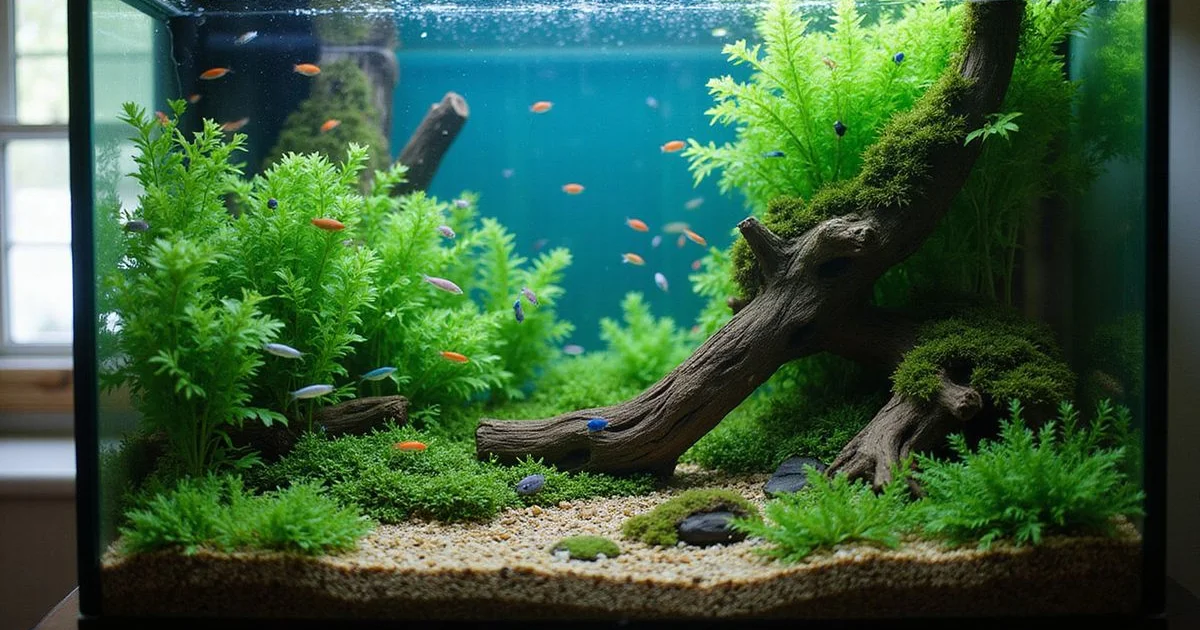
We look at temperament, size, water parameters, and activity zones. A compatible community has overlap in parameters and activity, with no aggression mismatches.
- Temperament: Peaceful, semi-aggressive, or aggressive behaviors dictate harmony.
- Size at adulthood: Tiny 1-inch tetras easily become snacks for 6-inch tank mates.
- Water parameters: Soft-water species and hard-water species require entirely different chemistry.
- Activity zone: Top-dwellers, mid-water schoolers, and bottom-dwellers need their own dedicated swimming space.
Group A: Peaceful schoolers (mid-water)
We consider these community tank fish the backbone of any vibrant aquatic display.
Neon tetras are incredibly popular, but they require specific conditions like a temperature range of 72 to 76 degrees Fahrenheit to thrive. Rummynose tetras act as perfect living water quality indicators for your setup.
Our service technicians always check their red snouts, because a fading color means the tank parameters are slipping. Mixing these peaceful species freely creates a stunning visual display. Pair these mid-water swimmers with bottom dwellers and peaceful livebearers.
We strongly advise avoiding aggressive tank mates that nip fins and cause stress.
- Tetras: Neon, cardinal, ember, glowlight, lemon, rummynose, and black neon.
- Rasboras: Harlequin, chili, dwarf, and scissortail.
- Pencilfish: Dwarf pencilfish and three-lined pencilfish.
Group B: Livebearers (mid to top)
Our maintenance routes frequently feature tanks full of colorful livebearers.
These fish are incredibly hardy and adapt perfectly to the hard tap water found in places like Sarasota. They share space wonderfully with all peaceful schoolers and bottom dwellers.
We always warn clients about their rapid reproduction rates. Guppies drop fry approximately every 30 days, which can quickly overcrowd a display. Managing their population requires a solid plan from the beginning.
Our top recommendation is to stick to one sex if you want to prevent surprise babies.
- Guppies
- Platys
- Mollies
- Swordtails
- Endlers
Group C: Bottom dwellers
We love incorporating active bottom dwellers to keep the substrate clean.
Corydoras require fine sand rather than coarse gravel to protect their sensitive barbels from damage. Plecos are notorious for outgrowing their environments quickly.
Our team constantly replaces small tanks because common plecos can reach 15 to 24 inches in length and demand at least 75 gallons. Choosing the right bottom feeder prevents long-term spatial issues. Adding driftwood provides essential fiber for many wood-eating pleco varieties.
We carefully size every bottom-dwelling species before adding them to a community.
- Corydoras: Panda, julii, sterbai, and pygmy cats (keep in groups of 5 or more).
- Plecos: Bristlenose, common (size matters greatly), and clown plecos.
- Loaches: Kuhli (peaceful), yoyo (semi-aggressive), and clown (grow very large).
- Otocinclus: Small, peaceful algae eaters.
Group D: Centerpiece fish
Our design strategy usually focuses on one stunning centerpiece fish per tank.
Angelfish are magnificent soft-water specialists, but their tall fins require an aquarium with plenty of vertical height. Bettas can sometimes work in a 15-gallon community tank on a strict case-by-case basis.
We carefully monitor these larger fish to ensure they do not harass smaller tank mates. Dwarf cichlids offer another excellent focal point for a display. Bolivian Rams stay relatively small and peacefully sift through the sand.
Our preferred approach is adding the centerpiece last so the smaller fish can establish hiding spots.
- Gouramis: Dwarf, honey, pearl, and three-spot varieties.
- Bettas: Male bettas require careful observation in community settings.
- Angelfish: Tall-bodied fish that become aggressive when breeding.
- Apistogramma / Bolivian Ram: Dwarf cichlids that need specific water parameters.
Group E: Semi-aggressive (mix with caution)
We handle semi-aggressive species by matching them with sturdy, fast-moving companions.
Tiger barbs have a reputation for fin-nipping, but keeping them in larger schools of six or more keeps their aggression internal. Black widow tetras also nip fins if kept in numbers that are too small.
Our experts avoid mixing these fish with slow-moving species like angelfish or guppies. Some Apistogramma species establish highly territorial zones around caves or driftwood. Breaking line of sight with tall plants reduces chasing behavior significantly.
We use dense vegetation to create natural borders within the tank.
- Tiger barbs (keep in groups of 6 or more to reduce outward aggression).
- Black widow tetras (notorious fin nippers).
- Certain Apistogramma species (highly territorial).
Group F: Don’t mix with community
We see many enthusiastic buyers accidentally purchase tank busters that destroy community ecosystems.
Oscar fish are incredible pets, but they grow roughly one inch per month during their first year. A tiny two-inch juvenile will quickly become a 12 to 14-inch adult requiring heavy filtration.
Our strict rule is to reserve a dedicated 75-gallon minimum species tank for a single Oscar. Certain predatory species simply view smaller tank mates as an expensive meal. Mixing aggressive cichlids with peaceful tetras always ends in disaster.
We refuse to sell incompatible combinations because it guarantees a bad outcome.
- African Mbuna and Peacock cichlids (require a dedicated species tank).
- Oscars and large American cichlids (rapid growers).
- Two adult male bettas (will fight to the death).
- Most arowanas and large predatory catfish.
Sample stocking lists
We recommend building a community around a balanced bio-load and compatible water temperatures.
A well-planned 20-gallon setup provides enough swimming room without overwhelming the filtration system. Adding live plants alongside these fish helps absorb excess nitrates and oxygenate the water.
Our typical stocking blueprints rely on proven combinations that reduce stress for every inhabitant. The following chart outlines successful ratios for different tank sizes. Proper filtration turnover rates support the fish populations listed below.
We update these blueprints regularly based on long-term success rates.
| Tank Size | Stocking Blueprint |
|---|---|
| 10 gallon | 8 neon tetras + 4 corydoras pygmy + 2 mystery snails |
| 20 gallon | 8 cardinal tetras + 5 corydoras panda + 3 platys + 1 honey gourami |
| 29 gallon | 10 ember tetras + 6 sterbai cory + 4 amano shrimp + 1 dwarf gourami pair + 1 bristlenose pleco |
| 55 gallon | 12 rummynose tetras + 8 cherry barbs + 6 sterbai cory + 5 amano shrimp + 2 angelfish + 1 bristlenose pleco |
| 75+ gallon | Mix multiple schools, and add a peaceful centerpiece pair like Bolivian Rams or Apistogramma |
Order of stocking matters
We always advise adding fish slowly to protect the nitrogen cycle from crashing.
Rushing the process causes toxic ammonia and nitrite spikes that can wipe out an entire display. The API Freshwater Master Test Kit is the industry standard in the US for verifying your tank is ready for new arrivals.
Our process involves staging additions over a carefully planned 4 to 6-week timeline. Establishing territory properly prevents aggressive disputes among new tank mates. Adding the most docile species first gives them confidence to feed freely.
We sequence these builds at the counter to ensure the smoothest transition possible.
- Add the most peaceful species first to let them settle.
- Introduce schoolers next, always keeping them in groups of 6 or more.
- Add bottom-dwellers once the substrate has accumulated a little bio-film.
- Introduce the centerpiece fish last, so the existing fish own their territory before the boss arrives.
When to come in
We provide point-of-sale vetting to stop compatibility disasters before they happen.
Homeowners and business owners can bring in their existing stock lists for a complete cross-check. A successful aquatic display requires careful planning, not just a spontaneous shopping trip.
Our commitment is to tell you straight whether a combination works, which is the entire premise of how we run the freshwater section. Finding the right match creates a peaceful and visually stunning environment. Let the data guide your next addition.
We invite you to bring your water sample and tank info to the shop today.