
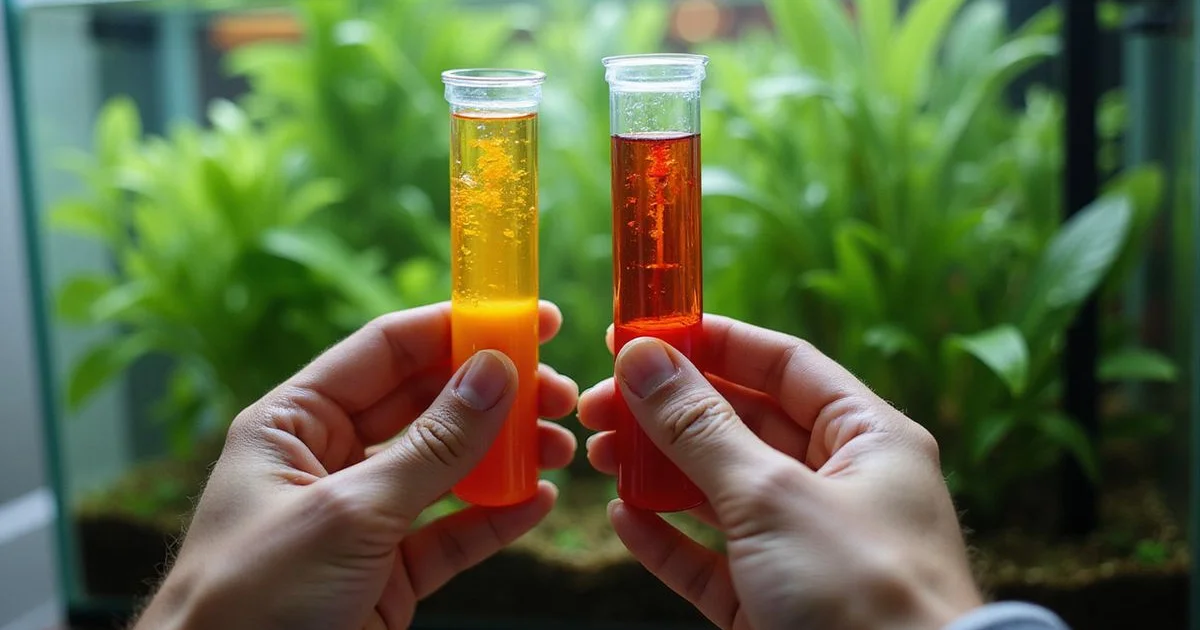
We see new setups fail constantly because people skip the foundational biological setup phase.
You likely know the frustration of losing livestock right after bringing a beautiful tank into your home or office. This guide breaks down the aquarium nitrogen cycle explained in simple terms to help you avoid that exact problem.
Our team uses these exact methods to establish safe environments for commercial displays. Let’s look at the data and explore a few practical ways to get your aquatic ecosystem running smoothly. If you have not yet bought your gear, our first freshwater aquarium setup guide covers the equipment shopping list before you even start the cycle.
What the cycle actually is
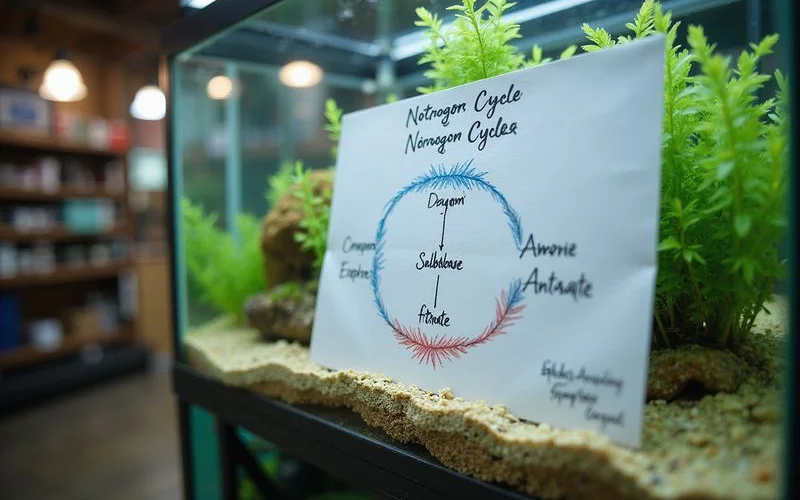
The nitrogen cycle is the biological process where beneficial bacteria convert highly toxic fish waste into less harmful compounds. We monitor this initial stage closely because ammonia causes severe gill damage at any detectable level. In any aquarium setup, organic waste from fish and decaying food immediately produces ammonia (NH3). The American Veterinary Medical Association warns that rising ammonia physically prevents a fish from excreting nitrogenous waste from its own blood. Our team uses liquid testing to catch this toxic accumulation before it becomes lethal.
The API Freshwater Master Test Kit is the industry standard in the US for tracking this exact chemical chain. The process runs in three distinct steps:
- Ammonia (NH3): Fish waste and decaying matter produce this compound. It is lethal to aquatic life at any detectable level.
- Nitrite (NO2): Nitrosomonas bacteria consume the ammonia and convert it into nitrite. This secondary chemical is almost equally toxic and stops fish blood from carrying oxygen.
- Nitrate (NO3): Our goal is to cultivate Nitrospira and Nitrobacter bacteria to consume the nitrite and turn it into nitrate. This final byproduct is less harmful and is removed by water changes.
A mature system handles the biological load fast enough that your livestock never experience a dangerous ammonia spike. Thriving colonies of both bacteria types cover the filter media and substrate in a fully established environment. We consider a tank completely safe only when it reaches this balanced state.
What you’ll see during cycling
A typical fishless cycle takes four to six weeks to complete naturally. You will watch the water chemistry parameters change in a very specific, predictable order. We test the water daily during this period to track the exact progression.
The process follows a standard timeline for most freshwater setups. Bacterial colonies require time to grow and establish themselves inside the filter media. Our experience shows that pushing the water temperature up to 82 degrees Fahrenheit during a fishless cycle significantly speeds up bacterial metabolism.
| Week | Ammonia | Nitrite | Nitrate |
|---|---|---|---|
| 1-2 | Rising, then peak | 0 | 0 |
| 2-3 | Falling | Rising, then peak | Trace |
| 3-4 | 0 | Falling | Rising |
| 5-6 | 0 | 0 | Stable, manageable |
You will likely notice cloudy water in the first few days of the setup. This milky appearance is a harmless heterotrophic bacterial bloom rather than a water quality problem. We remind clients to just wait it out instead of performing massive water changes that disrupt the developing ecosystem.
Why fishless beats fish-in
Cycling a tank without livestock is the only humane and reliable way to establish a biological filter. The outdated fish-in method of dropping hardy species into an uncycled environment kills livestock slowly. We actively discourage this older practice because it exposes animals to severe chemical burns and chronic stress.
Every ammonia and nitrite spike causes permanent gill damage and significantly shortens the lifespan of any surviving fish. Replacing expensive livestock repeatedly also frustrates new hobbyists and wastes money. Our protocol relies on a few key alternatives to feed the bacteria safely:
- Liquid Ammonia Drops: Products like Dr. Tim’s Aquatics Ammonium Chloride allow you to dose exactly 2.0 parts per million safely.
- Decaying Fish Food: Dropping a small pinch of flake food into the empty tank creates a steady ammonia supply as it rots.
- Established Media: Moving a used filter sponge from a healthy tank instantly introduces a large colony of bacteria.
We recommend adding your favorite tropical fish only after the water tests perfectly stable for several consecutive days.
How to cycle faster
You can drastically reduce the typical four-to-six-week wait time by seeding the aquarium with active bacteria. Several safe methods accelerate the process without putting any live animals at risk. We frequently use a combination of these techniques to get commercial displays ready in just two weeks.
A combined approach finishes the tank cycling process safely and efficiently. Environmental factors play a huge role in how quickly the beneficial colonies multiply. Our technicians monitor these specific variables to guarantee rapid growth:
- Seeded Media: Borrowing used filter media from an established tank provides an instant bacterial foundation. Ask the counter staff for a piece of used sponge when you buy your starter setup.
- Bottled Bacteria: High-quality liquids like FritzZyme 7 or Seachem Stability introduce millions of live spores. You must add the recommended dosage daily for the first week.
- Ammonia Management: Pure ammonia drops or a chunk of fish food will dose the right concentration. Aim for 2.0 to 4.0 parts per million, as anything over 5.0 parts per million will actually stall the cycle.
- Optimal pH Levels: Nitrifying bacteria struggle to reproduce in highly acidic water. Maintain a pH above 7.0 to keep the reproduction rate high.
We gladly give away used filter media to our local customers to help them start strong. You just need to keep the sponge wet during transport. Place it directly into your new filtration system upon arrival.
When to walk in
Your setup is finally ready for livestock when your water tests at zero ammonia, zero nitrite, and a stable nitrate reading for three consecutive days. You should bring a freshly scooped water sample to the store for verification once you hit those numbers. We provide a free comprehensive water test to confirm the biological filter is fully functional.
Testing equipment at home can sometimes yield false readings if the chemical reagents are expired. A professional double-check ensures your investment remains completely safe. Our staff will analyze the sample and help you draft a smart starter stocking list.
The Aquarium Nitrogen Cycle Explained: Choosing Your First Residents
Starting with a small group of hardy fish prevents the new biological filter from crashing under a sudden heavy waste load. A massive influx of livestock will immediately overwhelm the young bacterial colony. We always suggest starting slow to build the ecosystem gradually.
- Transport the Sample Safely: Scoop the tank water into a clean glass jar with a tight lid.
- Avoid Soap Residue: Never use a container that recently held dish soap or chemical cleaners.
- Plan the Community: Discuss your long-term goals with the staff before heading to the tropical fish section.
- Acclimate Slowly: Float the new bags in your tank for twenty minutes to equalize the temperature.
We look forward to helping you select the perfect aquatic life for your newly established environment. Reviewing the aquarium nitrogen cycle explained above ensures your ecosystem thrives for years to come. Consistency is the key to maintaining perfect water quality.