
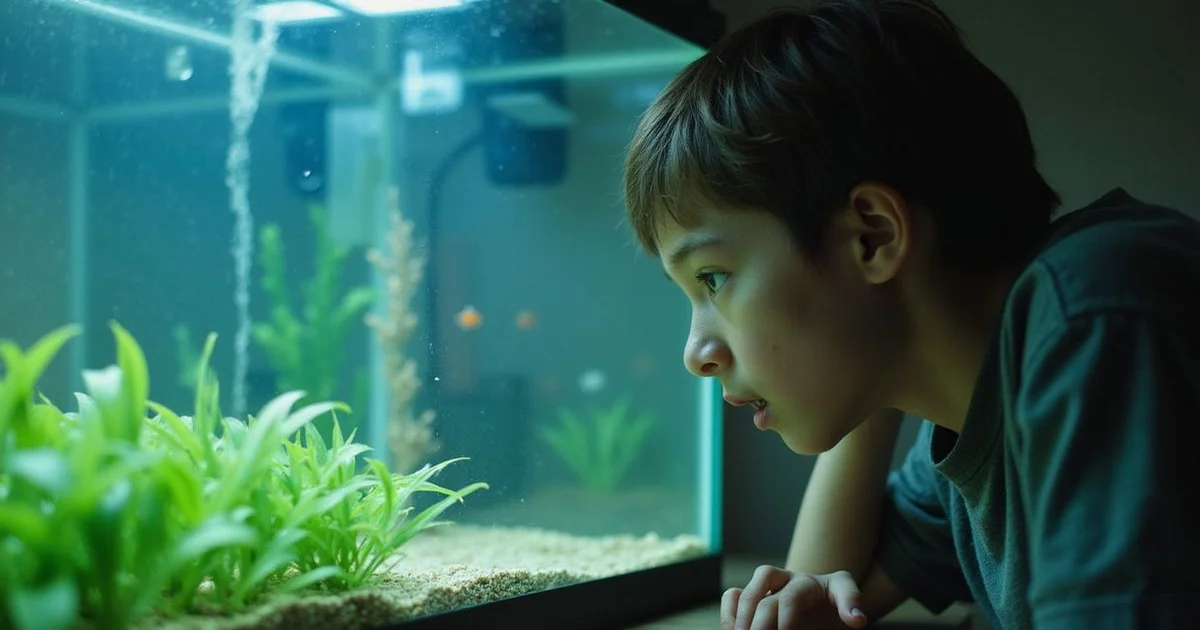
Setting up a vibrant aquarium in your home or business lobby should be an exciting milestone.
Industry surveys from 2025 reveal that nearly 60% of new setups fail within the first year due to preventable water quality issues.
We see these exact frustrations play out on a daily basis. The core problem usually traces back to a few fundamental missteps that turn a relaxing display into a stressful chore. The fish you start with matters too — our freshwater tropical fish selection is curated for beginner success, with every fish quarantined two weeks before it reaches the sale floor.
Understanding the actual mechanics of a tank environment separates the temporary setups from the long-lasting centerpieces.
Let’s look at the data, identify the specific reasons why fish die, and explore the precise protocols our service team uses to prevent new aquarium problems.
Mistake 1: Adding fish before the tank is cycled
The most frequent reason new tanks fail is adding fish before establishing a biological filter to process waste. You must read about the nitrogen cycle and complete a 4-to-6-week fishless cycle before introducing any livestock.
Uncycled water rapidly turns toxic from fish waste. Data shows that ammonia levels above 0.5 parts per million (ppm) quickly kill fish, creating a deadly condition commonly called new tank syndrome.
We give away seeded filter media to customers buying their first tank from us. Just ask at the counter.
Proven Cycling Strategies
To establish this critical bacteria colony, you need a safe ammonia source and a high-quality bacteria starter.
- Dose a Starter: Products like API Quick Start or Seachem Stability introduce dormant beneficial bacteria directly into the water.
- Feed the Tank: Use a liquid ammonia source, such as Dr. Tim’s Aquatics Ammonium Chloride, to keep the bacteria fed while the tank is empty.
- Test for Zeros: Your cycle is complete only when your testing kit shows 0 ppm for both ammonia and nitrite within 24 hours of dosing.
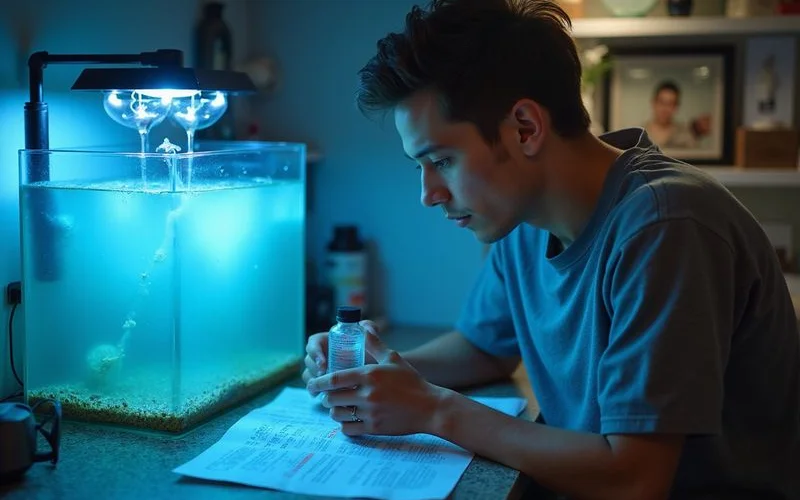
Mistake 2: Overstocking on day one
Overloading a fresh setup with too many fish overwhelms the young biological filter, leading to deadly water parameter crashes. To avoid this problem, add only a small group of hardy fish initially and space out new additions over several weeks.
Many beginners still follow the outdated one inch of fish per gallon rule. This specific guideline is a myth that fails to account for adult fish mass and total waste production.
| Stocking Method | Concept | Risk Level | Real-World Application |
|---|---|---|---|
| One-Inch Rule | Measures only fish length | High | Often leads to overcrowding in small tanks |
| Bioload Tracking | Calculates mass and waste output | Low | Uses tools like AqAdvisor for accurate limits |
We always advise adding livestock in planned waves. Starting with the most peaceful, hardiest species gives the tank time to adjust to the new biological load.
Re-testing the water seven days after each addition verifies the bacteria have caught up. Stop adding fish when your weekly nitrate test climbs past the amount you can safely remove with routine water changes. For a standard 20-gallon tank, a safe stocking limit is typically 8 to 10 small fish total.
Mistake 3: Mixing incompatible species
Placing incompatible fish together results in chronic stress, torn fins, and inevitable fatalities. Always verify species compatibility regarding water temperature, aggression levels, and preferred swimming zones before making a purchase.
A classic example of this error is pairing notorious fin-nippers, like Tiger Barbs, with slow-moving, long-finned species such as Fancy Guppies or Angelfish.
We vet every new fish for compatibility before bagging them up for your specific tank setup. Refusing to sell fish that clash is the entire point of how our shop operates.
Common Compatibility Red Flags
To prevent chronic stress and disease outbreaks like Ich, watch out for these stocking errors:
- Mixing aggressive semi-cichlids with peaceful community tetras.
- Housing multiple territorial bottom-dwellers in a small footprint.
- Pairing tropical species with cold-water fish like goldfish.
Mistake 4: Overfeeding
Feeding fish too much causes leftover food to rot, creating massive ammonia spikes that crash a tank by week three. Limit feedings to an amount your fish can completely consume in exactly two minutes, twice a day.
Our maintenance crews constantly see well-meaning owners crash their tanks by overfeeding. If any food reaches the gravel, you have poured in too much.
A fish’s stomach is roughly the size of its eye. They need a fraction of the food that their begging behavior suggests, making a weekly fasting day highly beneficial.
Swapping out cheap, filler-heavy flake foods for high-quality, dense pellets like Omega One or New Life Spectrum significantly reduces excess waste. In nature, fish do not eat every single day, so skipping a day of feeding each week perfectly mimics their natural digestion cycle.
Mistake 5: Skipping water changes
Skipping weekly water changes allows toxic nitrates to accumulate and depletes essential minerals. Perform a 25% to 30% water change every single week to physically remove waste and refresh the system.
For a healthy community tank, you must keep nitrate levels strictly below 40 ppm, with an ideal target of under 20 ppm. Using a dedicated water-changing tool, like the Python No Spill Clean and Fill system, makes vacuuming the substrate and refilling the tank significantly easier for homeowners.
We recommend matching the temperature of the new water to your tank to prevent temperature shock. Always dose a high-quality water conditioner directly into the fresh tap water before adding it back in to neutralize chlorine immediately.
| Mistake | Symptom | Quick fix |
|---|---|---|
| Skipped cycle | Cloudy water, fish gasping | Pause, test, partial water changes |
| Overstocking | Frequent deaths, algae | Reduce stock, increase changes |
| Bad pairing | Torn fins, hiding | Rehome aggressor or victim |
| Overfeeding | Cloudy water, ammonia | Cut feeding in half |
| No changes | Old water, nitrate creep | Restart 25% weekly |
When to walk in
If your tank parameters spiral out of control, do not guess at the solution. Bring an 8oz sample of your tank water in a clean jar to our shop for professional testing and immediate rescue steps.
We use professional-grade testing tools, similar to the API Freshwater Master Test Kit, to accurately identify the exact chemical imbalance. Knowing your precise pH, ammonia, nitrite, and nitrate levels allows us to formulate a targeted action plan before you lose any more livestock.
Bring these items to the shop for a complete assessment:
- An 8oz sample of tank water.
- A list of your current fish species.
- Details about your filtration system.
We provide these diagnostic tests for free because your success is our priority. The aquarium setup consultation covers troubleshooting for existing tanks, not just brand-new builds.
Achieving Long-Term Aquarium Success
Building a beautiful and stable aquarium requires patience and a solid understanding of water chemistry. The most common mistakes are entirely avoidable with the right preparation and expert guidance.
We want your aquatic display to thrive for years to come. Reach out to our team today to schedule your personalized consultation.