
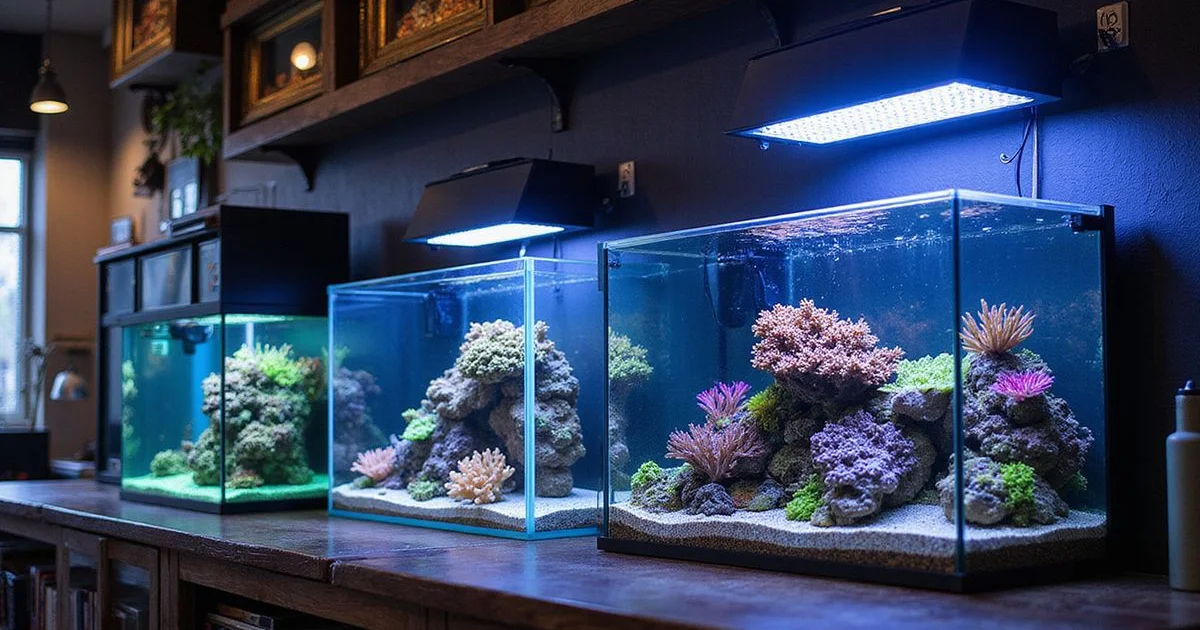
We often field questions from homeowners and business owners about the true saltwater aquarium starter cost.
The truth is, that initial budget is just the entry fee.
Our goal today is to outline the exact equipment and expenses needed for a successful build. You will discover how matching your gear to your lifestyle prevents common, costly mistakes — and once you know the budget, our saltwater fish selection lets you stock with quarantined livestock instead of risking expensive losses.
We broke down three common tiers to give you a clear baseline. Let’s look at the data and explore practical ways to plan your investment. If you are still on the fence about whether saltwater is right for your skill level, is a saltwater aquarium hard for beginners tackles that question head-on before you commit a dollar.
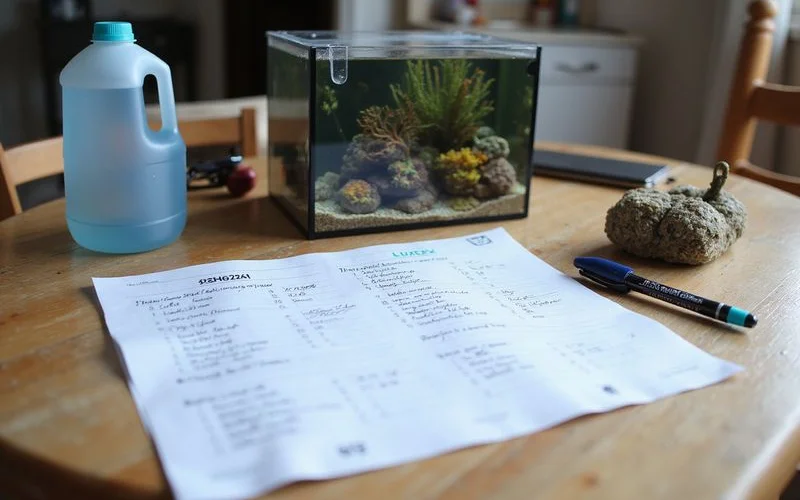
Tier 1: Nano reef ($500-800)
The smallest realistic entry point is the nano setup. A 10 to 30-gallon all-in-one tank is highly suitable for first-time saltwater hobbyists.
| Item | Cost |
|---|---|
| All-in-one nano tank (Innovative Marine, Fluval Sea, Red Sea Max Nano) | $250-400 |
| Sand (live or aragonite) | $30-60 |
| Live rock (10-15 lbs) | $80-150 |
| Salt mix (Instant Ocean reef crystals or similar) | $40-60 |
| Test kit (alkalinity, calcium, magnesium, ammonia, nitrite, nitrate) | $80-120 |
| Refractometer | $30 |
| Heater | $30-50 |
| Cleanup crew (snails, hermits, shrimp) | $50-80 |
| First fish (clownfish pair) | $50-80 |
| Buy RO/DI water from us (initial fill) | $20-40 |
| Subtotal | $660-1,070 |
We always suggest planning your livestock timeline in advance. For a fish-only nano without coral plans, you are at $500 to $700. With first corals in six to eight weeks, add another $100 to $200 for soft coral starter frags.
Starter soft corals, like Green Star Polyps or Zoanthus frags, typically run $25 to $40 at local Florida coral farms. This pricing makes upgrading to a mixed reef highly accessible for beginners.
Our top insider tip is to automate your fresh water top-offs. Nano tanks evaporate water rapidly, causing dangerous salinity swings. A smart Auto Top-Off (ATO) system, like the XP Aqua Duetto, costs around $120 and automatically replaces evaporated water to keep your parameters rock solid.
Optional additions to consider:
- RO/DI unit: $150-300 (saves long-term water cost)
- Upgraded LED lighting: $150-300 (for growing corals)
Tier 2: Mid-size reef-ready ($1,200-2,500)
A 40 to 75-gallon tank with proper sump, lighting, and equipment sets the foundation for serious reef-keeping. This setup provides excellent water volume for stability.
| Item | Cost |
|---|---|
| 40-75 gal drilled tank with stand | $400-700 |
| Sump and plumbing | $200-350 |
| Return pump and powerheads | $150-300 |
| Protein skimmer | $200-400 |
| Reef-grade lighting (AI Hydra or Kessil) | $300-600 |
| Live rock and sand | $200-350 |
| RO/DI unit (4-stage) | $200-300 |
| Salt, test kit, refractometer | $150-250 |
| Cleanup crew | $80-150 |
| First livestock (clownfish, gobies, blennies) | $100-200 |
| Subtotal | $1,980-3,600 |
We see most serious reefers land directly in this mid-size tier. The initial investment buys heavy-duty equipment that lasts five to 10 years and supports a massive variety of corals.
This size requires you to calculate your household power usage. A typical 75-gallon reef pulling 300 watts on average costs about $15 to $25 a month in power. Florida Power and Light (FPL) residential rates hover around 12 to 14 cents per kWh in 2026, making this a very manageable monthly utility expense.
Our installation teams frequently recommend comparing premium lighting options side-by-side. The Kessil A360X creates a stunning natural shimmer effect on the sandbed. The AI Hydra 32HD provides excellent, even spread across wider rock formations.
Tier 3: Premium reef build ($3,000-8,000+)
A 90+ gallon reef requires high-end lighting, advanced filtration, and smart automation. These larger systems offer the ultimate canvas for a spectacular marine display.
- Tank, stand, sump: $1,200-2,500
- Premium lighting (AI Hydra 64HD, Kessil A360X with controllers): $800-1,800
- Auto top-off and dosing system: $300-600
- Advanced controller (Apex, ReefLink): $400-800
- Premium return pump and gyre flow: $400-700
- Protein skimmer (Reef Octopus, Bubble Magus, etc.): $400-800
- RO/DI 5-stage with booster pump: $300-500
- Initial livestock and corals: $500-1,500
Homeowners often wonder how much reef tank costs scale up with size. We estimate the total at $4,000 to $9,000 to start for a premium 90-gallon build. Ongoing maintenance expenses increase proportionally with the larger water volume.
Our premium installations almost always include a dedicated aquarium controller like the Neptune Systems Apex Pro. This system runs about $800, but it monitors your pH, temperature, and salinity 24/7. That single device prevents common crashes that wipe out thousands of dollars in sensitive SPS corals.
Lighting at this tier focuses on maximum growth and vivid coloration. Ecotech Marine Radion XR30 G6 Pros are the current industry standard for these large, demanding displays.
Florida-specific costs
We have to address the unique environmental challenges of keeping a reef in this state. The local water and weather directly impact your required hardware.
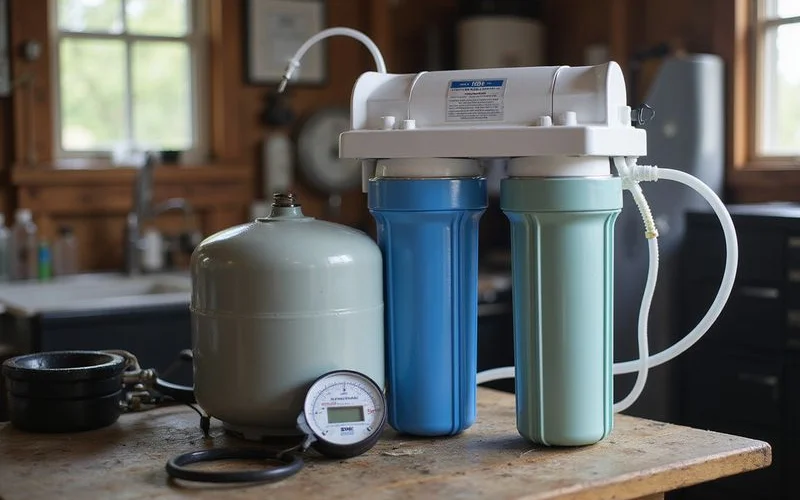
- RO/DI is mandatory. Sarasota tap chloramines and TDS make tap water unusable for reefs. Either buy water from us ($0.50-1.00/gal) or own a unit ($150-500). For tanks 40+ gallons, owning the unit pays back within 6-12 months. Recent 2026 water quality data shows Sarasota’s tap water has Total Dissolved Solids (TDS) exceeding 500 ppm and chloramine levels averaging 1.3 ppm. These chemicals are highly toxic to marine invertebrates.
- Summer cooling. Florida heat plus reef lighting can drive nano tanks to 84°F+ in summer afternoons. Mitigation strategies include:
- Clip-on fan over the sump or surface ($30) drops temperatures 2-3°F via evaporation.
- Chiller for larger tanks or SPS reefs ($300-700). A 1/10 HP JBJ Arctica Chiller will keep temperatures stable at 78°F, consuming about 2 to 3 kWh daily when it runs hard in July and August.
- LED lighting on a slightly shorter photoperiod.
- Hurricane preparation. Battery air pump ($30) for short outages; portable generator ($500-1,500) for longer ones. Most reef losses in tropical climates are power-related, not parameter-related.
Ongoing monthly costs
For a 30 to 50-gallon mixed reef, you need to budget for regular consumables. Consistent maintenance keeps your parameters stable and your livestock healthy.
- Salt mix: $15-30
- RO/DI water (if buying): $40-80
- Calcium / alkalinity dosing supplements: $15-30
- Test reagent refills: $10-20
- Occasional livestock: variable
- Replacement filter media, carbon: $10-20
We advise setting aside $40 to $100 per month for an active reef.
You can lower these recurring expenses significantly by purchasing your essentials in bulk. A 160-gallon bucket of a premium blend, like Tropic Marin Pro-Reef or Red Sea Coral Pro, costs around $80 to $90. This single bucket easily lasts four to six months on a 40-gallon tank doing standard 10% weekly water changes.
Testing reagents represent another hidden cost that surprises new owners. Hanna Checker packets run about $10 to $15 for a box of 25. Buying these refills ensures you have nearly half a year of weekly alkalinity testing ready to go.
Where to save and where not to
We want you to allocate your Florida reef tank budget where it actually matters.
Save on:
- Used tank (with absolutely no copper history).
- Live rock (dry rock + cycle = 80% of live rock results). Starting with Marco Rocks dry rock and curing it with FritzZyme Turbo Start 900 saves hundreds over buying fully cured live rock at $10 per pound.
- Generic refractometer (same accuracy as branded).
Don’t skimp on:
- Lighting (corals depend on it; cheap LEDs underperform massively).
- Salt mix (no-name brands have severe parameter inconsistencies).
- Test kits (cheap dry-tab kits drift and become unreliable). Digital options like the Milwaukee MA887 Digital Salinity Tester provide absolute certainty compared to cheap, highly inaccurate floating hydrometers.
When to come in
Bring your space dimensions, your budget, and what you want long-term. You might want a simple fish-only setup, a soft coral garden, or a highly technical SPS reef.
We will specify a build that matches the goal, not just the budget.
The free setup consultation covers all three tiers, plus the realistic ongoing costs you should plan for. Let’s get your exact requirements mapped out so you can start building with confidence.