
Every seasoned aquarist knows the sinking feeling of introducing a seemingly healthy fish, only to watch a thriving ecosystem collapse days later. The excitement of a new addition often overshadows the invisible risks lurking in the transport bag.
We see this exact scenario play out weekly with well-intentioned hobbyists.
You invest time and money into creating a pristine environment, but a single compromised arrival unravels it all. That is why every fish in our saltwater fish selection sits in quarantine for two full weeks before reaching the sale floor — no exceptions. Let’s look at the data behind parasite life cycles, what a proper fish quarantine protocol actually requires, and a few practical ways to respond. After the QT clock runs out, summer transport is the next risk window — read acclimation secrets for Florida heat before you drive a bag home in July.
What quarantine actually entails
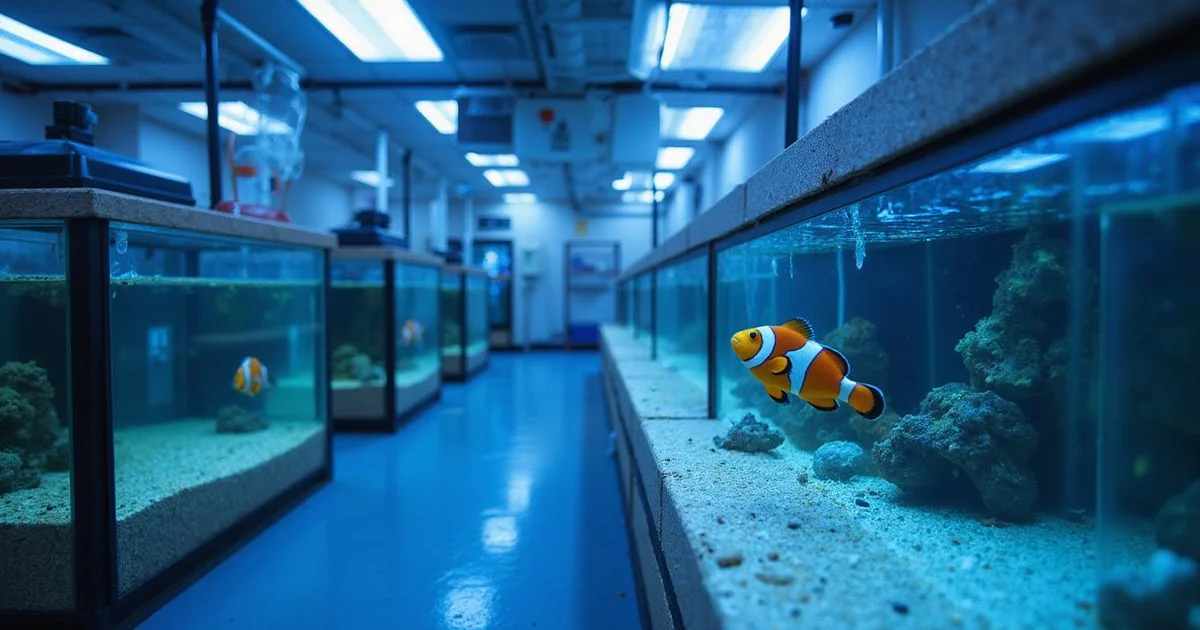
Two weeks in quarantine is never just a marketing claim for us. This critical observation period ensures every new arrival is monitored for the specific diseases that crash established reef tanks. We utilize a dedicated system to spot these microscopic threats before they ever reach your home.
The holding protocol relies on bare-bottom tanks to prevent parasites from hiding in the sand. Stable parameters are absolutely vital during this vulnerable time. We match the salinity to standard display tanks, keep the pH between 8.0 and 8.4, and hold the temperature at a steady 78°F.
Ammonia and nitrite levels are strictly kept at absolute zero.
The Core Threats We Monitor
- Marine ich (Cryptocaryon irritans): This shows up as visible white spots. Copper-sensitive treatments are required here.
- Velvet (Amyloodinium ocellatum): A fast killer with a gold dust appearance. Formalin or targeted copper handles this outbreak.
- Flukes (Neobenedenia, Trematoda): These gill and skin parasites restrict breathing. Praziquantel easily eradicates them.
- Bacterial infections: Symptoms include fin rot, popeye, and body lesions. Antibiotics clear these up quickly.
- General stress symptoms: Flashing, scratching, and a stubborn refusal to eat signal underlying issues.
Modern Treatment Protocols
We prefer using chelated copper formulas like Copper Power during prophylactic treatments. This specific medication is far safer for sensitive species like wrasses compared to older ionic copper solutions. Maintaining a stable therapeutic level of 2.0 to 2.5 ppm allows us to eliminate threats without causing organ damage to the animal.
Why two weeks is the minimum
We base this timeframe directly on the biological life cycle of common parasites. Marine ich, scientifically known as Cryptocaryon irritans, operates on a multi-stage timeline that takes several days to complete. The visible white spot stage, called the trophont, is only one brief phase of the infection.
After feeding on the host for three to nine days, the parasite drops off to reproduce. It encysts in the substrate as a tomont, becoming completely invisible to the naked eye. We know from parasitology data that these cysts can hide out for up to 28 days before releasing hundreds of new, free-swimming attackers.
A single week of observation frequently misses this hidden reproductive phase, but two full weeks catches almost all early infestations as the new parasites hatch. Anything that fails to thrive during this strict observation window never makes it to the sales floor.
What happens to fish that don’t make it
This reality represents the hidden cost that the industry rarely discusses openly. Some specimens enter the facility carrying severe diseases that simply do not respond to modern medications. Transport stress from overseas collection takes a massive toll on wild-caught animals.
Industry reports from 2026 indicate that up to 30% to 50% of unquarantined marine fish perish within the first few months. We actively absorb that financial loss to protect your investment. Fish sometimes develop delayed symptoms in week two, forcing them to stay longer in the medical tanks or be humanely euthanized.
The livestock that successfully survives this gauntlet and reaches the sales floor represents the absolute strongest tier. You benefit directly from the rigorous filtering process that removes the weak and infected. Our entire business model revolves around this simple premise.
What big-box and online sellers actually do
Most national chain pet stores and online discount sellers skip the isolation process entirely. The wholesaler ships the animal, it arrives at the store, and it goes straight into a shared sales tank or directly back into a shipping box. You usually receive a creature that has been handled for mere days.
This frantic method introduces ich, velvet, and flukes in roughly half of all new stocking attempts. A beautiful reef tank can completely crash just weeks after adding a single unchecked tang or angelfish. The financial damage is staggering when you evaluate current market prices.
We see homeowners losing thousands of dollars in established corals and mature livestock just because of one cheap purchase. Setting up an average 30-gallon saltwater aquarium in 2026 easily costs between $1,500 and $2,200.
The True Cost of Unquarantined Livestock
To put this into perspective, compare the hidden costs associated with traditional retail models versus proper isolation protocols.
| Factor | Big-Box & Discount Online | Proper 14-Day Protocol |
|---|---|---|
| Initial Fish Cost | Cheaper upfront price | Slightly higher premium |
| Disease Risk | 30% to 50% chance of introducing parasites | Near zero risk of tank-wiping pathogens |
| Potential Tank Crash Cost | $1,500 to $2,200+ in lost corals and livestock | Protected existing investment |
| Guarantee Value | Refunds the $40 fish, ignores the $2,000 tank | Prevents the crash from happening at all |
Online replacement programs only refund the cost of the dead arrival. They never cover the devastating loss of your living ecosystem. The free replacement they send is simply another unquarantined carrier.
Our seven-day guarantee
We stand behind the health of our livestock for a full seven days after purchase. You simply need to provide the original receipt and a separate water sample for testing. This policy specifically covers any underlying health issues that managed to slip past our two-week observation period.
Common Guarantee Exclusions
Certain situations fall outside of this coverage protocol:
- Acclimation losses: Dripping shipped animals too slowly often causes lethal ammonia spikes in the bag.
- Predation: Existing tank inhabitants attacking and eating the newcomer.
- Compatibility problems: Ignoring our specific warnings about aggressive tank mates at the time of sale.
- Uncycled environments: Adding livestock to brand-new setups that lack established biological filtration.
Bring the deceased specimen back to us within the seven-day window. Keeping the body refrigerated, rather than frozen, preserves the tissue for accurate disease identification. We will gladly analyze your water parameters with reliable tools like Hanna Checkers to issue a store credit or a healthy saltwater fish replacement.
What this means for you
Stocking fish from us means a dramatically lower chance of disease introduction. This rigorous protocol delivers highly practical implications for your home or business display.
The Three Core Benefits
- Dramatically lower disease introduction: Buying from the shop means your risk of importing a tank-wiping parasite drops to near zero.
- A safer existing display: Your delicate corals remain secure from harsh chemical treatments or copper dosing.
- Protected new builds: The critical nitrogen cycle of your brand-new system won’t be ruined by a sick initial inhabitant.
Veteran aquarists who have been burned by big-box stores know exactly how much is at stake. Finding healthy, quarantined saltwater fish in Sarasota shouldn’t be a gamble.
You should never have to experience the heartbreak of a completely preventable ecosystem crash again. See the saltwater hub for our current, fully cleared stock.
When to come in
Most weeks feature a rotating selection of 30 to 40 distinct species finishing up their medication cycles. Another 30 to 40 cleared animals actively swim on the retail floor, ready for their forever homes.
Call ahead if you are hunting for something specific or rare, as captive-bred Storm Clownfish color morphs, Ruby Head Fairy Wrasses, and beginner-safe Watchman Gobies tend to sell out within hours of clearance.
Our team is always ready to help you plan your next perfect addition. Stop by the shop today or call us to reserve the exact fish your reef needs.