
Most new aquarium owners assume saltwater fish and tropical freshwater fish are just two variations of the same hobby.
They’re not. These two systems have completely different water chemistry needs, equipment requirements, and weekly maintenance demands.
Choosing based on looks alone is one of the most common and costly mistakes new aquarists make.
The key distinction: freshwater tropical tanks forgive beginner mistakes, but saltwater systems punish them. That one fact should shape your first decision.
This guide covers the environmental needs for each type, realistic setup costs, compatible species, and an honest side-by-side comparison. By the end, you’ll know which tank fits your experience level, budget, and schedule.
Key Takeaways
- Tropical fish need water between 75 and 80 degrees Fahrenheit and a minimum 10-gallon tank. Saltwater fish require at least 30 gallons, artificial seawater, and specialized equipment.
- Freshwater tropical tanks need weekly testing and 10 to 25 percent water changes. Saltwater tanks need multiple checks per week with precise salinity, pH, and alkalinity levels.
- Tropical fish are moderately challenging for beginners and have medium setup costs. Saltwater fish are the most demanding, with high initial and ongoing expenses.
- Marine aquariums support corals, anemones, and invertebrates for complex reef ecosystems. Tropical freshwater tanks focus on fish species and aquatic plants.
- Beginners do best starting with tropical fish. Experienced aquarists can take on the demanding chemistry of a saltwater system.
Key Differences Between Saltwater and Tropical Fish
Saltwater fish live in marine aquariums with high salinity levels. Tropical freshwater fish thrive in a completely different environment, with distinct water parameters, pH balance, and water chemistry needs.
Your choice between these two types really comes down to three things: the water chemistry each system requires, how the nitrogen cycle works in each tank, and how beneficial bacteria perform in each environment. Understanding those differences makes every other decision easier.
What Are the Water and Environmental Needs for Saltwater vs Tropical Fish?
Tropical freshwater fish need warm water between 75 and 80 degrees Fahrenheit. A heater keeps your tank at the right temperature year-round.
Freshwater tanks also need a good filter to kick off the nitrogen cycle. This is the process where beneficial bacteria convert fish waste into less harmful nitrate. Cold water fish like goldfish are an exception, since they need cooler temperatures and different care than tropical species.
A basic freshwater aquarium setup includes these core items:
- A suitably sized filter
- A heater for tropical species
- Lighting and substrate
- Decorations or aquatic plants
You fill freshwater tanks directly with tap water, which makes getting started much simpler. A 10-gallon tank works well for most freshwater beginners, though a larger tank is generally easier to keep stable over time.
Saltwater aquariums are a completely different challenge. You can’t use tap water. You need to mix marine salt with RODI water (reverse osmosis/deionized water), which strips out the impurities that tap water carries and that would otherwise harm your fish.
Saltwater setups also require a protein skimmer to remove dissolved waste, powerheads for water circulation, and enhanced lighting for coral reef environments. The equipment list is longer, and so is the cost.
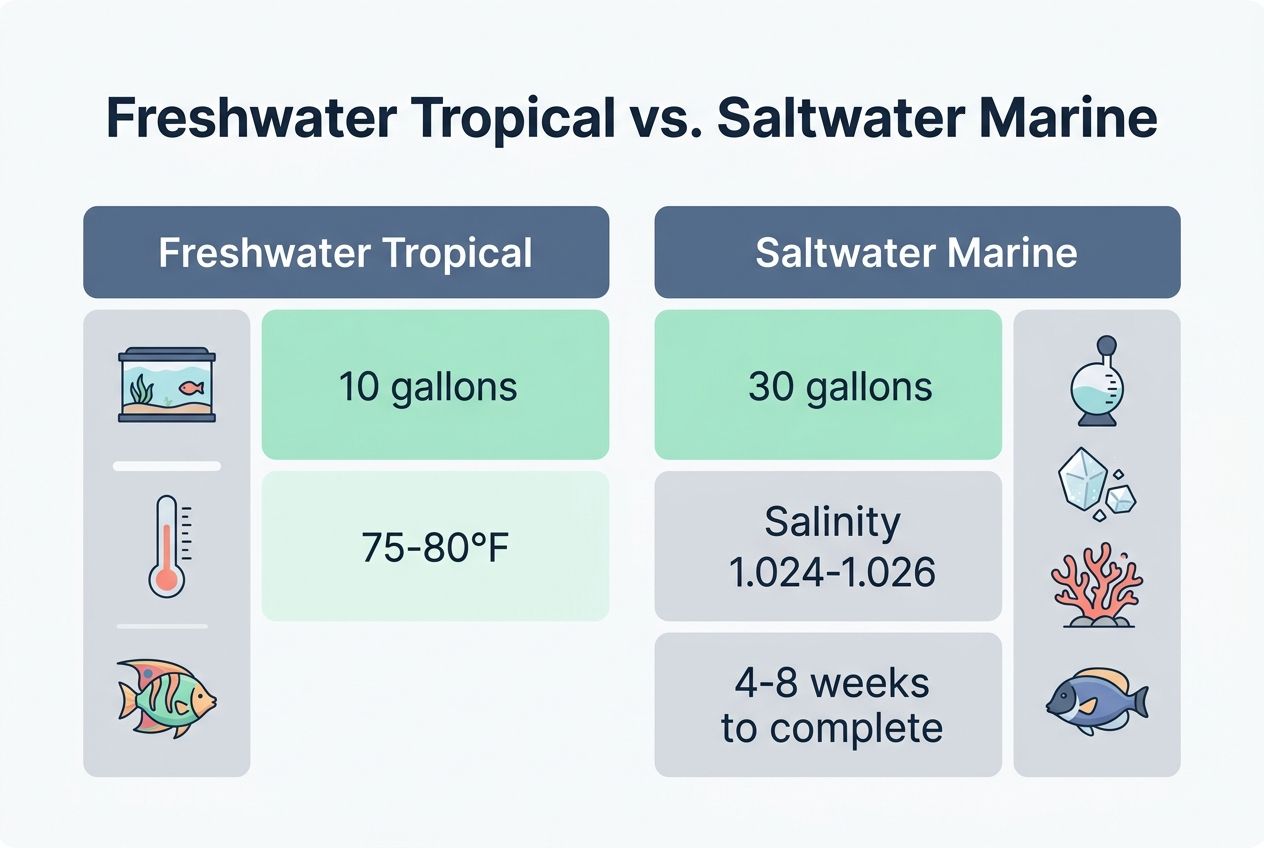
| Requirement | Freshwater Tropical | Saltwater Marine |
|---|---|---|
| Water source | Treated tap water | RODI water + marine salt mix |
| Minimum tank size | 10 gallons | 30 gallons |
| Temperature | 75-80°F | Varies by species |
| Salinity (specific gravity) | Not required | 1.024-1.026 |
| Nitrogen cycle timeline | Faster to establish | 4-8 weeks to complete |
The nitrogen cycle matters just as much in a marine tank. Beneficial bacteria still break down ammonia and nitrite, but the process takes longer. A minimum of 30 gallons helps keep water conditions stable in a saltwater system.
According to 2025 tank setup guidelines from US aquarium manufacturer AquaDreamUSA, marine systems require maintaining a specific gravity strictly between 1.024 and 1.026, and the initial nitrogen cycle can take 4 to 8 weeks to safely complete. That is a full month or two before your tank is ready for fish.
Marine fish also have more specialized dietary needs than most freshwater species. Standard flake food often won’t cut it, so you’ll need to build feeding routines that match each species’ requirements.
How Do Care and Maintenance Requirements Differ Between These Fish?
Freshwater fish are far less demanding than saltwater species. You test your freshwater tank once a week and change 10 to 25 percent of the water to keep conditions stable. Daily feeding takes just a few minutes.
Freshwater tanks also forgive minor mistakes. Cichlids and other popular freshwater species tolerate small shifts in water parameters without stress or illness. That built-in tolerance makes aquarium maintenance much less stressful for beginners.
Saltwater aquariums require a completely different level of attention. Here is what your weekly routine will likely include:
- Multiple water parameter checks (salinity, pH, and alkalinity)
- Protein skimmer cleaning and monitoring
- Preparing artificial seawater for water changes
- Checking live rock and biological filtration health
- Monitoring invertebrate life and coral conditions
Saltwater fish need specific alkalinity levels that can shift quickly. As noted by water testing manufacturer Hanna Instruments, marine tanks require alkalinity to stay strictly between 8 and 12 dKH (degrees of carbonate hardness). Let that number drop or spike outside that window, and you risk lethal pH swings that can kill your fish fast.
Tropical marine fish like clownfish thrive only when parameters stay exact. You can’t skip days of checking. Live rock in saltwater setups also needs weeks to establish proper biofiltration, so your tank can’t be rushed into service the way a freshwater system can.
Your saltwater aquarium maintenance also includes sump care, metal halide light adjustments, and feeding inverts with specialized food. The time you put into a saltwater system far exceeds what freshwater fish demand each week.
Choosing the Right Fish for Your Aquarium
Your tank size and setup make a significant difference in which fish you can keep. You need to pick fish that match your space, your equipment, and your ability to care for them consistently.
How Do Tank Size and Setup Affect Fish Selection?
A 10 to 20-gallon tank works well for freshwater beginners. Saltwater aquarium fish need more space, requiring at least 30 gallons to keep water conditions stable.
Goldfish can grow up to 30 centimeters or more, so they need a medium or large aquarium rather than a small bowl. They also produce a lot of waste, which means your filtration system needs to handle the extra load.
Nano cubes are an economical starting point for a tropical marine reef setup. Keep in mind that smaller saltwater tanks carry greater risk because water chemistry shifts more quickly in a smaller volume.
Before buying anything, map out these four key setup factors:
- Tank volume: 10-20 gallons for freshwater; 30+ gallons for saltwater
- Equipment: Basic filter and heater for freshwater; protein skimmer, powerheads, and RODI system for saltwater
- Water type: Tap water for freshwater; RODI water plus marine salt mix for saltwater
- Budget: According to 2026 pricing data from US custom aquarium builders like Aqua Creations and Boodleshire Aquatics, a complete 30-gallon freshwater setup averages around $900 to $1,000 (roughly $30 per gallon), while a similarly sized entry-level saltwater setup will easily cost $5,000 more due to specialized lighting, skimmers, and salt mixes
Heating is often necessary for tropical fish, which adds to both your initial costs and your ongoing expenses. Brackish water systems fall somewhere in the middle and carry their own special requirements.
Match your tank setup to the specific needs of the fish you want, not the other way around.
Which Fish Are Compatible and What Behaviors Should You Expect?
Choosing compatible fish means understanding their natural behavior before you buy. A peaceful community tank is only possible if the species you select can genuinely coexist.
Freshwater community fish:
- Tetras, guppies, platies, and mollies share similar water requirements and peaceful temperaments, making them natural tank mates.
- Male bettas must never share a tank with other males. They fight aggressively and will injure each other.
- Corydoras catfish live on the bottom and avoid conflict with most species, making them excellent additions to community setups.
- Goldfish are generally non-aggressive, though some types like Ryukins may face aggression from other fish in a mixed tank.
Saltwater species and behavior:
- According to a 2025 beginner saltwater guide by FishLab, the Ocellaris Clownfish is widely considered one of the hardiest and most peaceful starter marine fish available.
- Damselfish, by contrast, are surprisingly aggressive and territorial toward tank mates despite their small size and wide availability in stores.
- Saltwater fish are not inherently more aggressive than freshwater fish. Both environments contain species with varying temperaments and behaviors.
Stores like PetSmart carry tropical community fish that work well under similar water conditions. A Fish Compatibility Guide is a valuable resource when selecting tank mates, since it lists which species live peacefully together.
Research each species before adding it to your tank. Incompatible fish create ongoing stress and conflict. Observe your fish daily for signs of aggression, hiding, or unusual behavior, since those signs tell you quickly whether your groupings are working.
What Are the Pros and Cons of Saltwater Versus Tropical Fish?
Saltwater and tropical fish each bring distinct advantages and real challenges to your aquarium setup. Understanding these trade-offs helps you make the best decision for your situation.
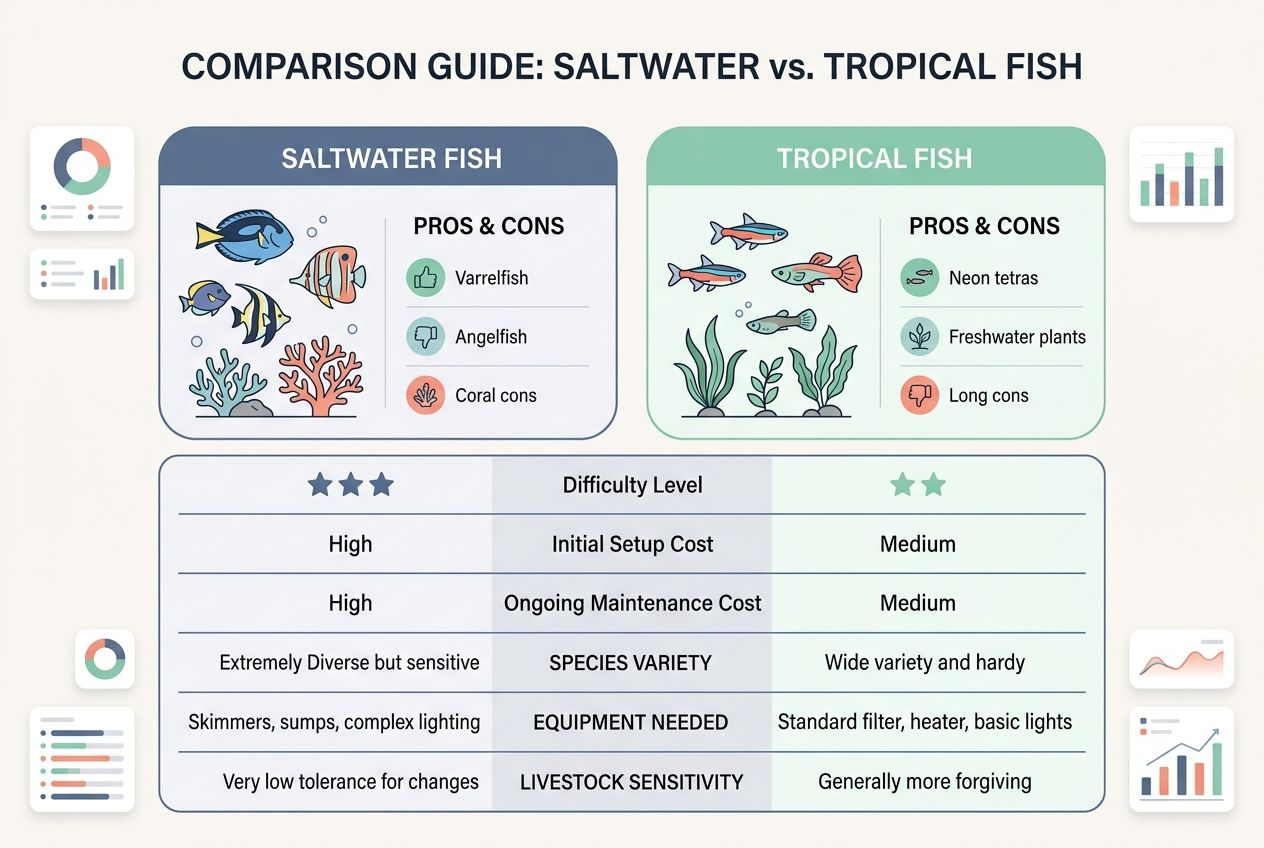
| Aspect | Saltwater Fish | Tropical Fish |
|---|---|---|
| Visual Appeal | Vibrant colors and unique species create stunning displays. Live corals and reef organisms add extraordinary beauty. Many species don’t exist in freshwater environments. | Colorful options include bettas, guppies, cichlids, and tetras. Freshwater species offer impressive aesthetics too. Personal preference determines which looks best. |
| Difficulty Level | Marine fish rank at three asterisks (***), the highest difficulty tier. Demanding water chemistry requires expertise and attention. Beginners face steep learning curves with saltwater systems. | Tropical fish rate at two asterisks (**), making them moderately challenging. Easier water management than marine setups. Better suited for those just starting out. |
| Initial Setup Cost | Marine fish setup costs are high. Equipment expenses include specialized filtration, protein skimmers, and testing kits. Saltwater systems require significant financial investment upfront. | Tropical fish setups cost medium amounts. Standard aquarium equipment suffices for most species. Your wallet takes less of a hit initially. |
| Ongoing Maintenance Cost | Marine fish maintenance stays expensive throughout ownership. Salt mixes, specialized foods, and frequent testing add up fast. Long-term costs exceed tropical fish expenses considerably. | Tropical fish maintenance costs remain medium-range. Standard filters and basic supplies keep expenses manageable. A budget-friendly option for long-term aquarists. |
| Water Chemistry Management | Saltwater systems require precise salinity, pH, and alkalinity levels. Temperature stability matters greatly for marine species. Regular testing prevents fish stress and disease. | Freshwater tropical tanks need less chemical precision. Basic pH and temperature control work fine. Maintenance routines prove less demanding overall. |
| Ecosystem Complexity | Marine aquariums support corals, anemones, and invertebrates. Reef setups create mini ocean ecosystems. Biodiversity options expand significantly with saltwater. | Tropical freshwater tanks focus primarily on fish species. Aquatic plant life thrives well in these environments. Simpler ecosystems require fewer variables to manage. |
| Beginner-Friendliness | Marine fish aren’t ideal for beginners. The three-asterisk difficulty rating reflects real challenges. Experienced aquarists find saltwater more rewarding. | Tropical fish work better for starting out. Two-asterisk difficulty allows for a gentler learning curve. Newcomers gain confidence with these species. |
| Species Variety | Saltwater offers exclusive fish unavailable in freshwater. Clownfish, tangs, and angelfish fascinate many hobbyists. Unique reef inhabitants create memorable displays. | Tropical freshwater provides excellent variety too. Cichlids, tetras, and plecos offer diverse options. Many aquarists never feel limited by freshwater choices. |
Time is one of the most honest ways to compare these two systems. Based on the consensus of experienced US aquarists on forums like Reef2Reef, a well-established freshwater tank can often be maintained in under 30 minutes a week. A thriving saltwater reef system typically requires 1 to 3 hours weekly for water testing, skimmer cleaning, and preparing RODI saltwater.
That is a meaningful gap. Before you commit to a saltwater setup, ask yourself honestly whether you have that time each week, every single week.
Marine aquariums demand commitment, skill, and financial resources that go well beyond what tropical setups require. Tropical fish systems reward beginners with manageable care routines and lower expenses, while saltwater aquariums appeal to dedicated hobbyists who want the challenge and the visual payoff.
Conclusion
Choosing between saltwater fish and tropical fish comes down to your experience level, your time, and your budget.
Freshwater tanks work best for beginners. They cost less, need fewer water tests, and forgive mistakes more easily. Tropical fish thrive in these simpler setups, and you’ll find many species at local pet stores.
Saltwater systems demand more effort. You must test water multiple times each week, mix salt with purified water, and invest in specialized gear like protein skimmers and powerheads.
Start with what fits your life right now. Research your chosen species carefully, and give your tank time to cycle so the healthy bacteria your fish need can fully establish.
Visit our shop or browse our saltwater fish and freshwater tropical fish selections to gather your supplies and take your first step toward building an aquarium you’re proud of.