
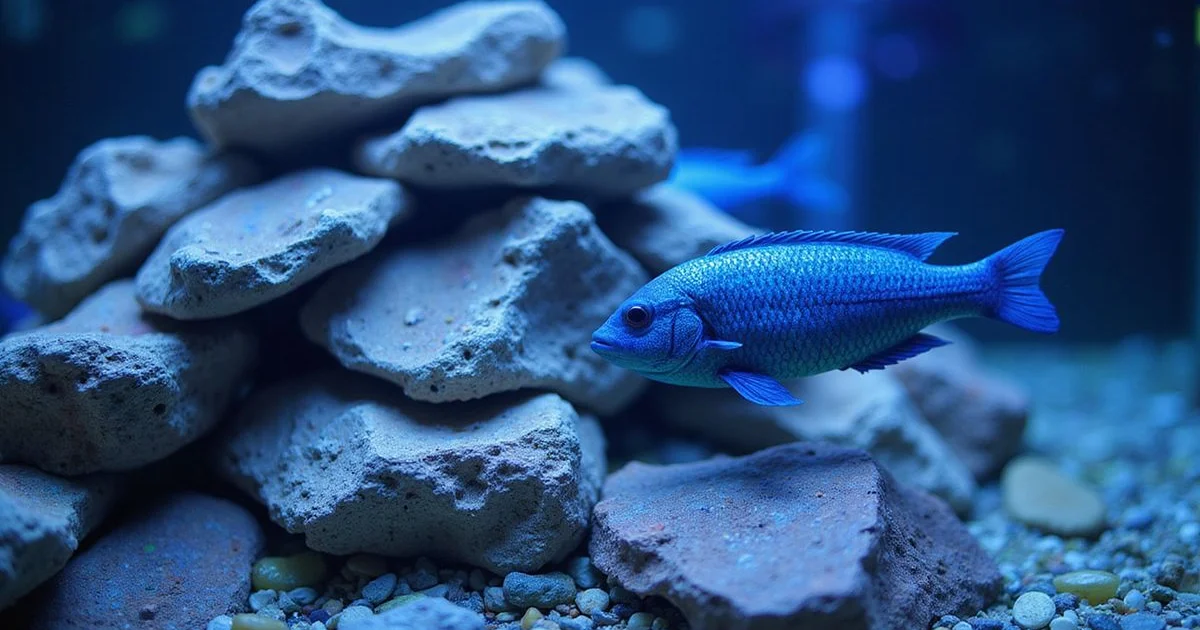
Many local hobbyists struggle because they try to fight their tap water instead of working with it.
Our service team sees this constantly when setting up new tanks. Sarasota municipal water is practically liquid rock, often measuring a naturally alkaline pH above 8.0 with high mineral hardness. This heavy mineral content is exactly why certain species thrive here effortlessly while others fail.
We consider this local water profile the biggest deciding factor when comparing african vs south american cichlids. Whichever side you land on, our cichlids selection carries quarantined Africans and South Americans side-by-side so you can see the difference in person. Let us break down the fundamental differences between these two distinct habitats and outline the exact stocking strategies that work best for each — and once you commit to a biotope, our cichlid tank setup and aggression management guide walks through the rockwork and stocking ratios that actually work.
The fast comparison
| Aspect | African Rift | South American |
|---|---|---|
| Water | Hard, alkaline (pH 7.8-8.6) | Soft, slightly acidic (pH 6.0-7.4) |
| Temperament | Aggressive, territorial | Variable, from peaceful dwarfs to aggressive Oscars |
| Biotope | Rocks, sand, no plants | Driftwood, leaf litter, plants |
| Stocking strategy | Heavy stocking dilutes aggression | Lighter stocking, bonded pairs |
| Sarasota tap fit | Excellent (hard water natural) | Need RO/DI for soft-water specialists |
| Beginner-friendly | Mbuna for first cichlid keeper | Bolivian Ram easiest for beginner community |
| Tank size minimum | 55 gal (Mbuna) | 20 gal (dwarfs), 75 gal (Severum/Oscar) |
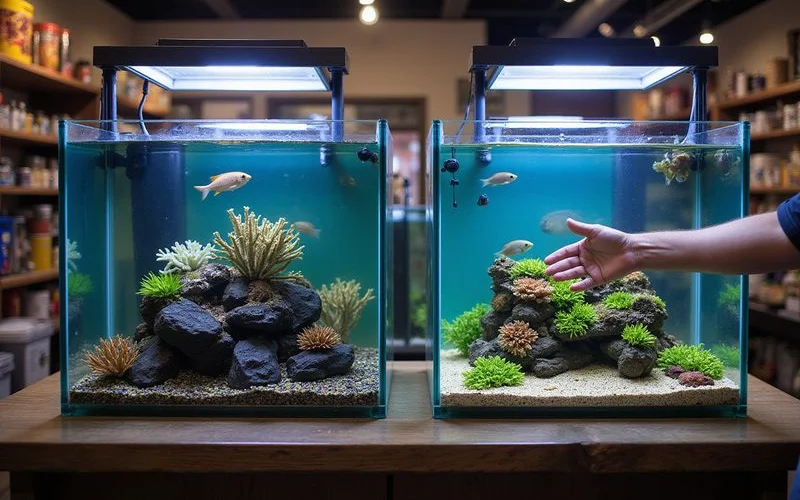
African Rift: the rock biotope
Rift Lake African cichlids require hard, mineral-rich water and rocky substrates to mimic their native lakes of Malawi, Tanganyika, and Victoria. Our local Sarasota tap water is perfectly matched for these conditions without requiring expensive chemical modifications.
Plants rarely survive in these setups because the fish actively dig in the sand and consume vegetation. We highly recommend utilizing a specific overcrowding strategy to manage the intense territorial behavior of these fish.
Industry experts typically suggest stocking these tanks at 115% to 125% capacity. This deliberate overstocking breaks the line of sight and prevents a dominant fish from fixating on a single target.
Malawi rock and sand dwellers
- Mbuna (Malawi rock-dwellers): Yellow Lab, Demasoni, Auratus, Rusty Cichlid. These bright, hardy fish are aggressive in close quarters and require a 55-gallon minimum rock-only setup. You must keep species like Demasoni in large groups of 12 or more to spread out internal aggression.
- Peacocks (Malawi sand-dwellers): The Aulonocara genus displays vivid blues and oranges. They show less aggression than Mbuna and prefer calmer tankmates in aquariums of 75 gallons or larger. We advise maintaining a strict ratio of one male to four females to reduce mating-related violence.
Tanganyikan and mixed species
- Tanganyikan shellies: Multipunctata and Ocellatus are small, peaceful fish that live in abandoned snail shells. They make fantastic residents for a 20-gallon or 29-gallon species-specific tank.
- Tanganyikan Cyprichromis: These open-water schoolers remain surprisingly peaceful. They need long tanks measuring at least four feet to swim freely.
- Hap and Peacock community: Large display tanks of 90 gallons or more work best for mixing these larger Haplochromis species.
Our technicians love these fish for their vivid colors and fascinating parental care behaviors. They genuinely thrive in our local tap water right out of the faucet.
The main drawback is their aggression, which prevents them from mixing with standard community fish. You must maintain species-only tanks, run oversized filtration, and perform frequent water changes to handle the heavy bioload.
South American: the planted biotope
When looking at rift lake cichlids vs amazon natives, the contrast is stark. South American cichlids originate from the soft, acidic waters of the Amazon, Orinoco, and La Plata river basins.
These environments feature dark water tinted by tannins from leaf litter, extensive driftwood, and dense aquatic plant life. Our standard tap water is too hard and alkaline for many of these delicate species.
A basic four-stage Reverse Osmosis and Deionization (RO/DI) system costs about $150 to $200 in 2026, and it remains a necessary investment to drop the pH down to the required 6.0 range. We often incorporate peaceful dwarf varieties into community tanks because they coexist beautifully with tetras and corydoras.
Popular Amazonian species
- Dwarf cichlids: The Apistogramma, German Blue Ram, Bolivian Ram, and Cockatoo varieties stay small enough for 20-gallon to 40-gallon enclosures. They are the top choice for hobbyists wanting bright cichlid colors inside a lush, planted ecosystem.
- Angels (Pterophyllum scalare): These classic fish require tall planted tanks and show mild aggression during breeding. A 55-gallon tank provides adequate space for a mature pair.
- Discus: These stunning fish demand extremely soft water and warm temperatures between 84°F and 86°F. We restrict Discus recommendations to advanced hobbyists only due to their strict parameter requirements.
- Severums and Festivums: These medium-sized soft-water fish remain peaceful enough to join large community setups.
- Oscars and Jack Dempseys: Large American predators require massive 75-gallon to 125-gallon tanks. They will eat smaller tankmates and destroy delicate plant life.
The primary advantage here is compatibility, allowing you to mix peaceful dwarfs and Severums with other common tropical fish. These species showcase incredible behavioral diversity and look gorgeous against green foliage.
Their main disadvantage is the strict water chemistry requirement, meaning soft-water specialists demand dedicated RO/DI filtration to survive locally.
Beginner picks
Selecting your first cichlid comes down to matching your desired aesthetic with your willingness to manage water chemistry. We recommend starting with hardy species that forgive minor rookie mistakes while you learn their unique behaviors.
The classic debate of mbuna vs apistogramma usually settles itself once you test your tap water. If you have never kept these fish before, consider these proven starting points:
- For brilliant African colors: Start with Yellow Labs and Acei in a 55-gallon Mbuna setup. These specific fish offer manageable aggression levels while providing vibrant yellow and purple hues. Our favorite strategy is utilizing the 115% stocking trick to keep their territories peaceful.
- For a planted community tank: Purchase a bonded pair of Bolivian Rams for a 29-gallon or 40-gallon tank alongside peaceful tetras. Bolivians forgive parameter swings far better than sensitive German Blue Rams and live a full four to five years with basic care.
- For a cautious scaling approach: Start small with a single Bolivian Ram or Yellow Lab to observe their digging and territorial habits. You can then graduate to a more advanced, multi-species setup once you feel comfortable.
When to come in
The best time to visit the shop is before you purchase any livestock, allowing us to finalize your hardware and water strategy. We constantly rotate our local inventory to feature both African and South American stock throughout the month.
A free setup consultation covers biotope choice, rockwork or hardscape planning, and the right starter species for your specific water profile. Our team uses this dedicated session to ensure your new fish thrive from day one, whether you choose african vs south american cichlids.
Stop by the store today to schedule your walkthrough and get your aquarium started on the right foot.