
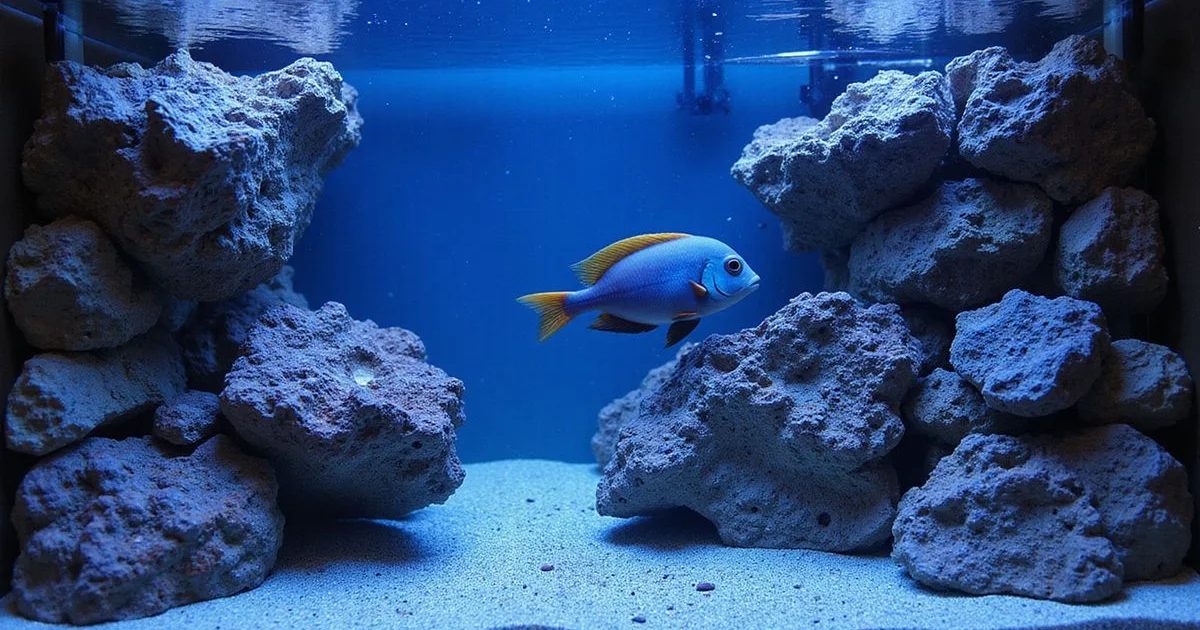
We see this common mistake constantly when people figure out how to set up a cichlid tank: a gorgeous African cichlid gets dropped straight into a standard community tank. That striking coloration often masks intense territorial instincts.
The resulting parameter conflict usually leads to chronic stress and non-stop fighting. Our team has spent years fixing these exact setups.
Choosing the correct foundation is essential before shopping for fish.
You save money and headaches by committing to a clear path early. We will outline the precise tank sizes, rockwork methods, and filter specs you need. If you are still deciding which side of the Atlantic to target, our African vs South American cichlids guide maps both biotopes against Sarasota’s hard tap water before you commit to a substrate.
This step-by-step breakdown shows you how to manage aggression right from day one.
How to set up a cichlid tank: Pick a biotope before anything else
Africa or South America are your two main choices. These two regions require completely different water chemistry, rockwork, and stocking strategies.
Our goal is to help you pick one specific biotope and stick to it. Mixing these environments creates parameter conflict and constant stress for the fish.
US tap water is often treated with chloramines, so preparing the chemistry correctly from the start is critical. We recommend treating all new tap water with a dedicated conditioner like Seachem Prime before doing anything else.
Depending on your local water source, you will need to adjust the baseline chemistry to match your chosen region:
- African Rift Lakes (Mbuna, Peacocks, Hap, Tanganyika): These fish need hard, alkaline water with a pH of 8.0 to 8.2. You can naturally buffer standard US tap water by using a substrate like CaribSea Eco-Complete Cichlid mix.
- South American (Angels, Discus, Apistogramma, Bolivian Ram, Severum, Oscar): These species require soft, slightly acidic water. The aquascape should feature driftwood and leaf litter to mimic the Amazon basin.
- Central American (Convicts, Firemouths, Jack Dempsey, Salvini): These are very territorial fish that tolerate harder water. They need much larger tanks to establish clear boundaries.
Tank size, be honest
Going smaller than the recommended volume invites aggression failure, regardless of how clever the rockwork is. Fish need open swimming space to retreat from dominant tank bosses.
Our installers always verify floor support before bringing in anything larger than a 55-gallon setup. A filled 55-gallon aquarium weighs over 600 pounds, requiring a heavy-duty stand.
Large species like the Frontosa can reach 13 inches long and demand 150 to 175 gallons at minimum. We urge clients to buy a tank large enough for the adult size of the fish, rather than planning to upgrade later.
Rehoming a massive, aggressive fish is extremely difficult.
| Species | Minimum tank |
|---|---|
| Apistogramma, Bolivian Ram, Keyhole | 20-29 gal |
| Kribensis, German Blue Ram | 20-30 gal |
| Severum, Firemouth | 55 gal |
| Mbuna setups | 55 gal |
| Peacock cichlids | 75 gal |
| Hap setups | 90+ gal |
| Oscar, large American cichlid | 75 gal min, 125 ideal |
| Tanganyikan shellies | 20-29 gal |
| Frontosa | 150+ gal |
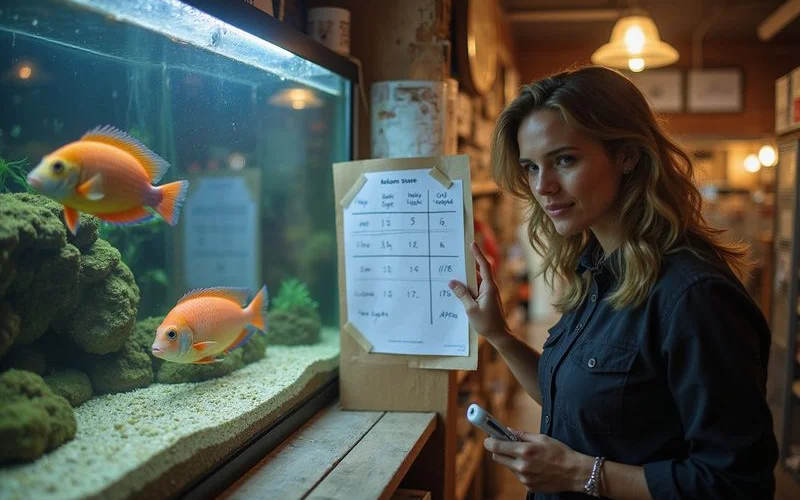
Rockwork, territories matter
For African Rift setups, rockwork serves as the primary aggression management tool. The main goal is to create visual line-of-sight breaks.
We build walls of rock, caves, and towers that force the fish to move around physical obstacles. The dominant fish cannot see the entire tank, so it cannot enforce dominance everywhere at once.
Aquascaping with the right materials makes a massive difference in behavior.
African cichlid aquascape strategies
A proper cichlid aquascape requires dense, stable structures. Our favorite material for these setups is genuine Texas Holey Rock.
This natural white limestone from central Texas provides excellent porous caves while naturally buffering the water to a high pH. Heavy stacks of stone can easily crack the bottom glass of an aquarium.
We always anchor rocks to the glass using a plastic egg crate underlay. You can find these plastic light diffuser panels at most US hardware stores.
- Use Texas Holey Rock, lava rock, or aquarium-safe slate.
- Stack the stones from the substrate up to within 4 to 6 inches of the waterline.
- Create at least one distinct cave per territorial fish.
- Place the egg crate directly on the bare glass before adding sand.
South American aquascape strategies
South American biotopes require a completely different approach. You need to swap most of the heavy stone for driftwood, leaf litter, and tall aquatic plants.
We often use Java Fern because it is low-light tolerant and hardy enough to survive with cichlids. Species like Apistos and Rams still want to establish territories.
They prefer to defend low caves and dense plant cover instead of towering rock walls.
The overstocking rule (for African Rift)
It seems counterintuitive, but a heavily stocked African Mbuna tank actually displays less visible aggression than a lightly stocked one. When there are dozens of similar-sized fish swimming together, no single individual becomes the primary bullying target.
Our maintenance crews rely on this strategy to keep local business displays peaceful. The aggression spreads thin, and specific territory boundaries blur into a constant flurry of activity.
This method requires strict adherence to water quality standards.
For a standard 55-gallon Mbuna tank, the sweet spot is typically 15 to 20 adult fish. We offset this heavy bioload by supercharging the filtration and maintenance routines.
High stocking density means nitrate levels will spike quickly. You must keep nitrates below 40 ppm to prevent long-term health issues.
Pair your dense stocking with these practices:
- Use filtration rated for 2 to 3 times your tank volume per hour (e.g., 110 to 165 GPH for a 55-gallon).
- Perform 30% to 50% weekly water changes religiously.
- Maintain stable parameters using a crushed coral substrate or mineral additives.
- Maximize biological filtration media, like Seachem Matrix, to handle the heavy waste output.
This rule absolutely does not apply to South American or Tanganyikan biotopes. Those specific environments require the exact opposite approach.
We keep those tanks lightly stocked to allow bonded pairs plenty of breeding space. Breeding pairs need plenty of quiet space.
Filtration upsizing
Cichlids produce a massive biological load, causing water parameters to drift fast. You need to plan for filtration rated for double your tank volume at an absolute minimum.
Our standard practice requires triple the turnover rate for dense African setups. Canister filters are generally the right choice for any aquarium over 55 gallons.
Hang-on-back filters simply lack the capacity for these heavy waste producers. We install the Fluval FX6 frequently because it processes an incredible 563 US gallons every hour. This specific unit includes smart pump technology that automatically pauses every 12 hours to evacuate trapped air.
For African setups, you also need to focus on specialized chemical filtration and buffering:
- Add aragonite sand directly to the bottom filter tray.
- Use crushed coral bags to steadily release calcium.
- Dose specialized cichlid salt during water changes.
Our team relies on these specific media additions to keep the pH securely locked at high targets. This stability prevents dangerous pH crashes.
Stocking order
The order in which you introduce fish heavily dictates the future hierarchy of the tank. Adding the most aggressive fish first guarantees they will claim the entire footprint.
We carefully sequence the introduction of each species to manage territorial disputes. You must also pace the additions to protect your biological filter.
Introducing too many fish at once causes a deadly ammonia spike.
African cichlid setup sequence
We recommend waiting at least two weeks between adding each new group of fish. This waiting period allows the beneficial bacteria to catch up to the new waste levels.
- Add subdominant species first: Start with milder fish like the Yellow Lab, Acei, or Rusty cichlids.
- Include dither fish: Fast-moving species like Giant Danios encourage shy cichlids to leave their caves.
- Introduce larger species next: Bring in the more robust fish like the Auratus or Crabro.
- The alpha species last: Add the largest, most aggressive fish only after the tankmates have established their own homes.
South American setup sequence
The strategy changes for soft-water environments. You need to establish the peaceful background fish before introducing the main attractions.
Our preferred method is to add schooling tetras first to act as dithers. These small fish show the larger cichlids that the open water is safe.
We bring in the centerpiece pairs, like Discus or Oscars, at the very end. This ensures the large fish do not terrorize the smaller schools immediately.
When to come in
We have kept and bred Mbuna, Peacocks, Apistos, and Rams personally. Every tank requires a slightly different approach based on your local water source and specific goals.
Our team is ready to sketch your specific tank layout with you right at the counter. This includes a detailed rockwork plan, stocking density chart, filtration spec, and water buffering strategy.
Mastering how to set up a cichlid tank is easier with professional guidance. Cichlid setup planning is a core part of our free consultation.
We want to ensure your aquatic environment thrives from day one. Stop by the shop this week with your water test results, and let us build your perfect biotope together.