
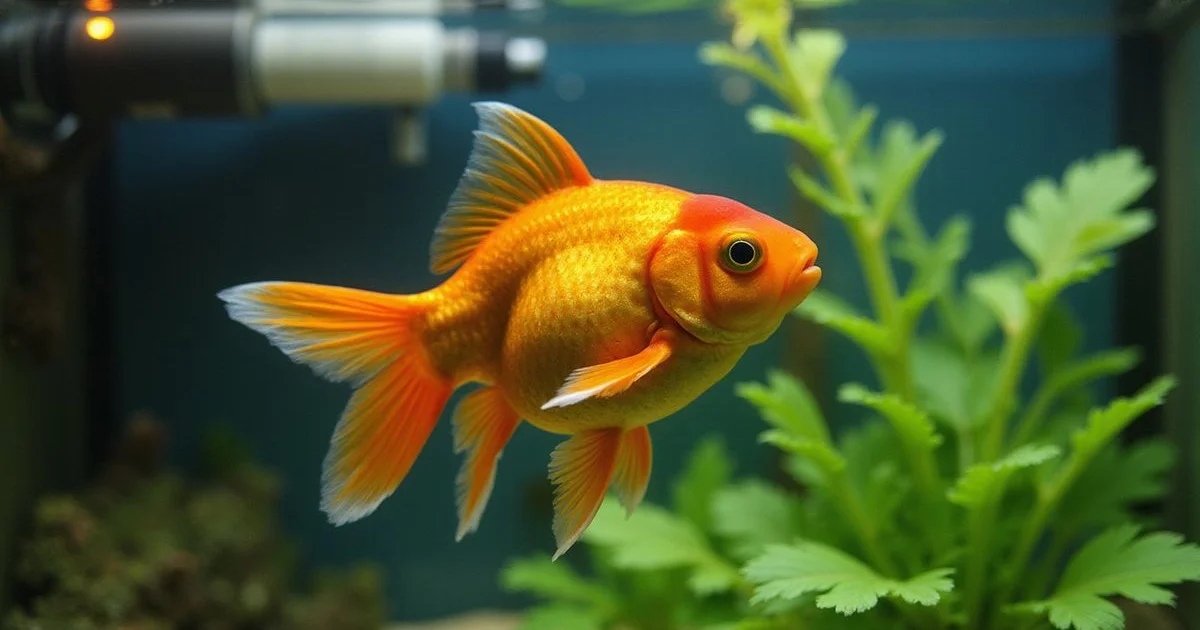
We hear the same story from frustrated fish keepers every week. You buy a small fish expecting an easy pet, but the water turns cloudy almost overnight.
The truth is that goldfish produce significantly more waste than standard tropical fish.
Upgrading your goldfish tank size is the single most effective way to solve this constant maintenance battle. We will break down the exact gallon requirements for different breeds and show you how to match your filtration to their heavy bioload — bring your dimensions in and we will spec the right setup against our goldfish and pond fish selection.
The numbers
Understanding the goldfish minimum tank rule is critical for your success. Calculating fancy goldfish gallons is straightforward: provide 20 gallons for the first fish and 10 extra gallons for each additional tank mate.
These round-bodied varieties, like Orandas and Ranchus, easily average six to eight inches in length as adults. Single-tail breeds like Comets and Shubunkins grow much larger, often reaching 12 to 18 inches.
We recommend a 75-gallon minimum for a single Comet kept indoors. Ignoring these baseline dimensions typically leads to stunted growth and severe health issues. Our team regularly upgrades clients to larger setups once they realize how fast these fish grow.
This chart breaks down the exact gallon thresholds needed to keep your water stable and your fish healthy.
| Breed Type | First Fish Requirement | Each Additional Fish | Adult Size |
|---|---|---|---|
| Fancy (Oranda, Ranchu, Ryukin) | 20 Gallons | +10 Gallons | 6 to 8 inches |
| Single-Tail (Comets, Shubunkins) | 75 Gallons (Indoor) | +110 Gallons (Group) | 12 to 18 inches |
Why bowls fail
A traditional one-to-two gallon glass bowl simply cannot house the beneficial bacteria needed to process goldfish waste. The water volume is entirely too small, meaning toxic ammonia spikes occur within hours of feeding.
We constantly remind customers that a bowl is a temporary display vessel and never a permanent habitat. Goldfish in bowls typically die within six to eighteen months from chronic ammonia exposure. Recent 2026 aquatic care guidelines confirm that properly housed common goldfish can live ten to twenty years.
The “old goldfish from the fair lived a year in a bowl” story is the exception, not the norm, and that fish lived in misery. Our experience shows that replacing a bowl with a standard 20-gallon rectangular tank immediately eliminates cloudy water problems.
Filtration and oxygenation
Your goldfish tank needs a filter rated to turn over four to five times the total water volume every hour. A 40-gallon tank requires a unit processing at least 160 to 200 gallons per hour to stay clean.
We highly recommend multi-stage canister filters, like the Fluval FX series, as the true workhorses for these heavy waste producers. You have several effective options depending on your setup.
- Canister Filters: The best choice for heavy bioloads and maximum biological media storage.
- Hang-on-Back (HOB) Filters: Great for medium tanks, though you will likely need two running simultaneously.
- Sponge Filters: Excellent for supplemental oxygen, but a single sponge filter will clog almost daily against goldfish waste.
These fish are extremely oxygen-hungry compared to standard tropical species. Our maintenance crews always install an air pump with a sponge filter or point the main return nozzle directly at the surface. Agitating the water surface maximizes gas exchange and helps them breathe much easier.
Temperature and water quality
Goldfish thrive in cooler water temperatures ranging from 68 to 74 degrees Fahrenheit. Indoor Sarasota homes hit this ideal coldwater range effortlessly without using any aquarium heater.
We always advise placing your aquarium carefully to avoid rapid temperature swings.
- Keep the tank away from direct afternoon sun to prevent dangerous overheating.
- Avoid placing the setup directly beneath AC vents to prevent sudden cold drops.
- Position the aquarium away from drafty windows during the winter months.
Test your water weekly using a reliable liquid kit like the API Freshwater Master Test Kit. Our goal is always to keep ammonia and nitrites at zero, with nitrates strictly below 20 ppm to prevent stress. Goldfish actually prefer the harder Sarasota tap water and do very well in a slightly alkaline pH range between 7.4 and 8.0. You must commit to changing at least 25 to 30 percent of the water every week.
Tank shape matters
Surface area dictates gas exchange, meaning a long, shallow tank is always superior to a tall, narrow one. Tall hexagon tanks or rounded shapes choke off the oxygen supply your fish desperately need.
We steer hobbyists toward standard 20-gallon “Long” or 40-gallon “Breeder” aquariums for this exact reason. The wide footprint of a breeder tank maximizes the surface area where oxygen meets the water. These horizontal shapes also give your fish the necessary runway to swim back and forth naturally.
| Tank Style | Oxygen Exchange | Swimming Space | Suitability |
|---|---|---|---|
| Long / Breeder | Excellent | High | Ideal |
| Tall / Hexagon | Poor | Low | Avoid |
| Round Bowl | Very Poor | None | Fatal |
Pond as upgrade option
A small backyard pond becomes the most practical upgrade once your single-tail or fancy goldfish eventually outgrow their indoor aquarium. Comets and Shubunkins specifically require 200 or more gallons per fish, making outdoor living their best long-term option.
We highly recommend reviewing our guide on pond fish for Sarasota’s climate to see exactly what survives the intense summer heat. While we do not install the actual pond structures, our staff will absolutely help you design the filtration and stock it correctly.
Moving fish outside requires careful acclimation. You need to ensure the pond has adequate shade and depth to protect them from predators and temperature spikes.
When to come in
Bring your goldfish-keeping plan and the exact room dimensions into the shop so we can spec the correct tank size and filtration system. We will give you a completely honest assessment of whether your available space can actually support the fish you want.
The free setup consultation we offer covers several critical steps to ensure your success.
- Matching the correct filtration capacity to your chosen tank size.
- Calculating realistic stocking limits for your specific goldfish breeds.
- Establishing the nitrogen cycle before you add any fish.
Setting up the tank correctly from day one saves you money and prevents the heartbreak of losing fish.
We want you to succeed with a beautiful, stable aquatic display. Stop by the shop this week with your measurements, and allow our experts to help you get started on the right path.