
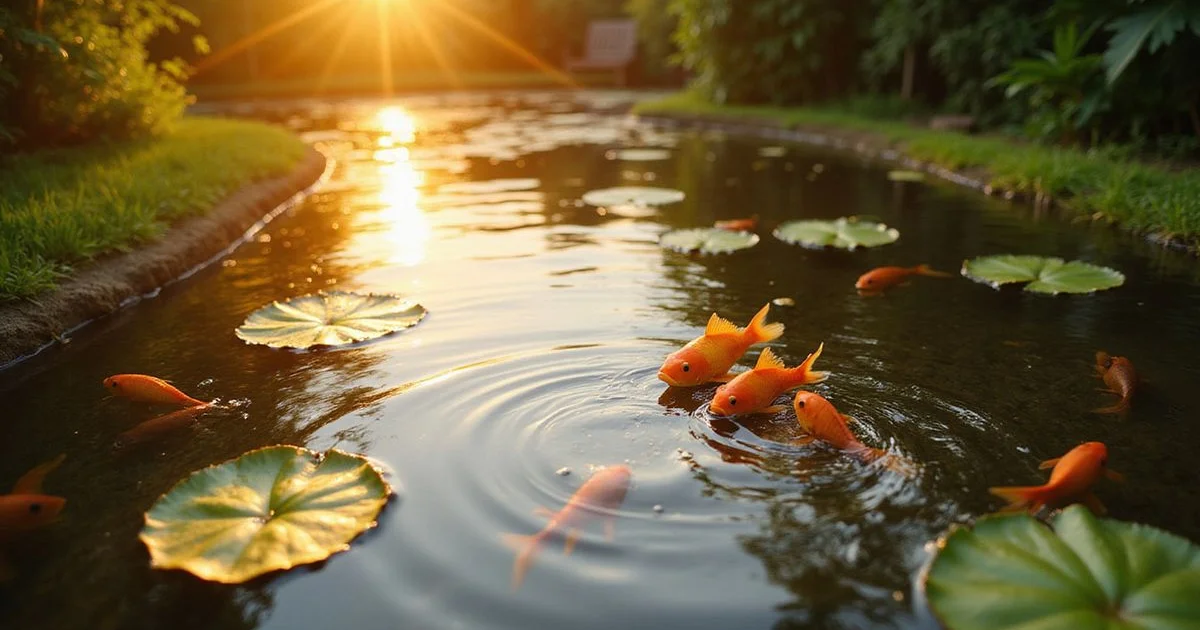
Sarasota’s pond reality
We know exactly how keeping pond fish in Sarasota, Florida presents a unique set of challenges for local homeowners and business owners trying to maintain water features. Subtropical climates offer two massive advantages for subtropical pond stocking, but they also bring one critical disadvantage.
You know how quickly a shallow backyard pond can turn into a warm, green soup by mid-July. This happens because local water temperatures in Lake Sarasota routinely hit 86 degrees Fahrenheit by August, drastically lowering the water’s capacity to hold dissolved oxygen.
Let’s look at the data, what it actually tells us, and explore practical ways to respond. If you are still weighing pond stock vs. an indoor goldfish setup, our goldfish tank requirements guide covers the indoor minimums by breed.
Our team recommends planning your setup around aeration and shade to make maintenance easy.
Advantages:
- Year-round liquid water eliminates the need for winter de-icing equipment.
- A long active season gives your fish 10 to 12 months of feeding and growth.
- Most popular pond species thrive in our standard temperature range.
Disadvantage:
- Severe summer oxygen depletion remains a major threat. Hot water holds significantly less dissolved oxygen, and Sarasota afternoons routinely hit 90 degrees Fahrenheit or higher. Without constant aeration, your fish risk suffocation during summer heat waves.
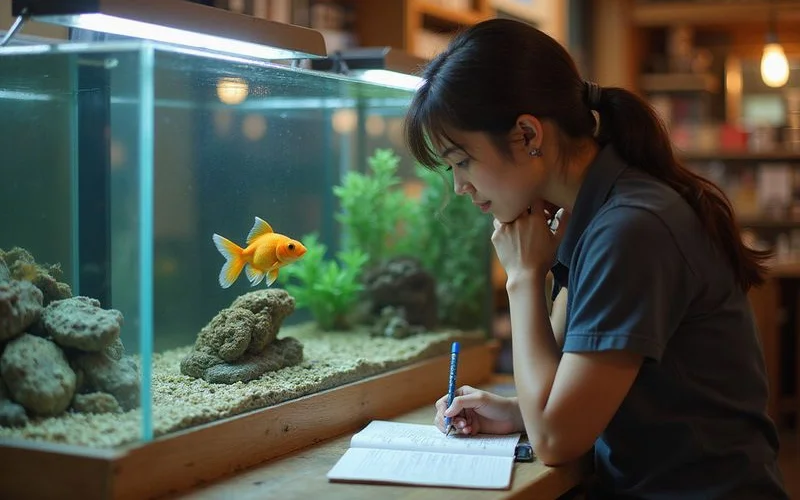
Reliable Sarasota pond fish
Our top recommendations for Florida pond fish include Koi, Comet goldfish, and Shubunkins. These specific varieties handle the heat well when given proper care and circulation. You will find that these hardy species provide the best long-term success for both residential and commercial setups. Selecting the right inhabitants saves you time, money, and frustration down the road.
Koi (Cyprinus carpio)
We always tell clients that Koi are the classic choice for a reason. These beautiful fish are incredibly hardy and can easily live 20 to 30 years under the right conditions. They tolerate our extreme heat perfectly well as long as you provide heavy, 24-hour aeration.
Growth rate is a major factor to consider before purchasing. Healthy Koi grow very large, easily reaching 18 to 24 inches in just a few years. You must plan your pond dimensions accordingly to accommodate this rapid expansion.
Our baseline rule is a minimum of 250 gallons of water per adult fish. Serious keepers should aim for total volumes exceeding 1,000 gallons. Depth is also critical for survival in Florida. Build your habitat at least three to four feet deep to protect these valuable pets from the Great Blue Heron, a very common year-round resident predator in our area.
Comet goldfish
We love recommending Comet goldfish for standard backyard setups. These are the active, single-tail swimmers you typically see darting around healthy water features. They possess a fantastic hardiness that rivals larger species, often living a full 10 to 20 years in pristine conditions.
Size expectations often surprise new owners. A Comet does not outgrow a small space the way a massive carp will, but they still easily reach 10 to 12 inches long. You should allocate at least 50 to 75 gallons of space per adult to prevent stunted growth.
Their active swimming habits require plenty of open gliding room. A larger environment directly reduces the chances of disease and extends their lifespan.
Shubunkin
Our inventory regularly features Shubunkins for their incredible visual appeal. These are essentially calico-colored, single-tail goldfish. They provide just as much durability as standard comets but deliver a much wider variety of mottled blues, oranges, and black patterns.
We often pair them directly with comets to create mixed, vibrant schools. They share the same 10 to 12-inch maximum size potential, so you can easily calculate their spatial needs using the same 50-gallon rule. A mixed school adds constant motion and brilliant flashes of color to any shaded garden feature.
Fancy goldfish (in shaded ponds)
We advise extreme caution when keeping fancy varieties outside in Florida. Orandas, ranchus, and ryukins can survive our climate, but only if you provide significant shade and heavy water flow. Their round bodies make them very slow swimmers compared to their streamlined cousins.
This sluggish movement turns them into easy targets for local wading birds and raccoons. They also struggle to tolerate the rapid temperature swings that occur during our rainy season.
Our strongest advice is to cover at least 30 to 40 percent of the water surface with lily pads or floating plants like water lettuce. This vegetative cover provides essential hiding spots and cools the water below.
Species to avoid
We actively discourage stocking certain species that simply cannot handle our specific climate or local laws. Choosing the wrong fish usually leads to rapid losses or unexpected legal issues for property owners. You need to stick to verified, hardy varieties to protect your investment.
Review this list of problematic additions before making any purchases:
- Telescope-eye, bubble-eye, and other deformed-eye varieties: Their compromised vision makes them highly vulnerable to sharp debris and quick predators.
- Black moors in unshaded ponds: Their dark coloration causes them to absorb too much heat and overheat in the harsh summer sun.
- Tropical fish: Most tropicals require water above 78 degrees Fahrenheit year-round. Our winter nights frequently drop well below that mark.
- Native predator fish (like Bass): It is illegal to release them into enclosed features without permits, and they will absolutely eat your expensive ornamental stock.
- Plecos (Plecostomus): These common algae eaters die quickly when water temperatures fall below 60 degrees Fahrenheit during our winter cold fronts. Common plecos also grow up to 24 inches long, rapidly outgrowing standard garden setups.
Pond essentials for Florida
Our maintenance crews rely on five specific components to keep local water features crystal clear. You cannot skip these foundational elements if you want a healthy, thriving ecosystem. The intense subtropical sun demands a strict approach to filtration and circulation.
Here is the required gear list for long-term success:
- Aeration: Install a waterfall, fountain, or a high-quality bottom diffuser like a Kasco Marine unit. You need enough power to turn over the entire water volume at least once every 24 hours. Keep this running 24/7 through the summer to prevent warm-weather losses.
- Shade: Use natural lily pads or a partial architectural structure. Achieving 30 to 40 percent surface coverage drastically reduces heat absorption and starves green algae of sunlight.
- Filtration: Your pump must process twice your total volume per hour at an absolute minimum. Combine mechanical and biological media with a trusted UV sterilizer, such as an Aqua Ultraviolet system. Target roughly 30 watts of UV power per 1,000 gallons for true sterilization.
- Skimmer: This device actively pulls floating leaves and debris from the surface before it sinks, rots, and spikes your ammonia levels.
- Predator deterrence: Use protective netting during the spring heron migration. Motion-activated sprinklers and steep, three-foot minimum depths also help your pets escape hungry birds.
Seasonal stocking
We typically carry live stock from March through late October. The timing of your purchase directly impacts how well the animals handle the transition into their new home. You will always see the highest survival rates during the milder spring months.
Florida heat makes acclimating new arrivals much harder than it is in northern states. We strongly advise floating the transport bags during the coolest morning hours to prevent temperature shock.
A scheduled stocking plan helps you manage additions safely. Follow these guidelines based on the current weather patterns:
| Month | Water Activity & Stocking Advice |
|---|---|
| March-May | Best stocking window. Temperatures are rising, and dissolved oxygen levels remain high. |
| June-August | High stress period. Acclimate new arrivals in the early morning only. |
| September-October | Excellent late-season window for establishing new additions before winter. |
| November-February | Limited retail stock. Stop feeding when water temperatures drop below 50 degrees Fahrenheit, as fish digestion halts. |
When to come in
We always recommend calling ahead to verify our current inventory before making the drive. Stock rotates extremely fast, and rare color patterns like Kohaku, Sanke, or Showa often sell out within just a few days. You want to secure your favorites while they are actively resting in our holding tanks.
Our policy is strict regarding animal welfare. Proper aeration and adequate shade are mandatory requirements before any animal leaves our facility. This rule ensures every fish goes to a safe, sustainable environment.
We will absolutely help you select the perfect pond fish for Sarasota, Florida, based on the setup you already have.
See the goldfish and pond hub for current selection and pricing.