
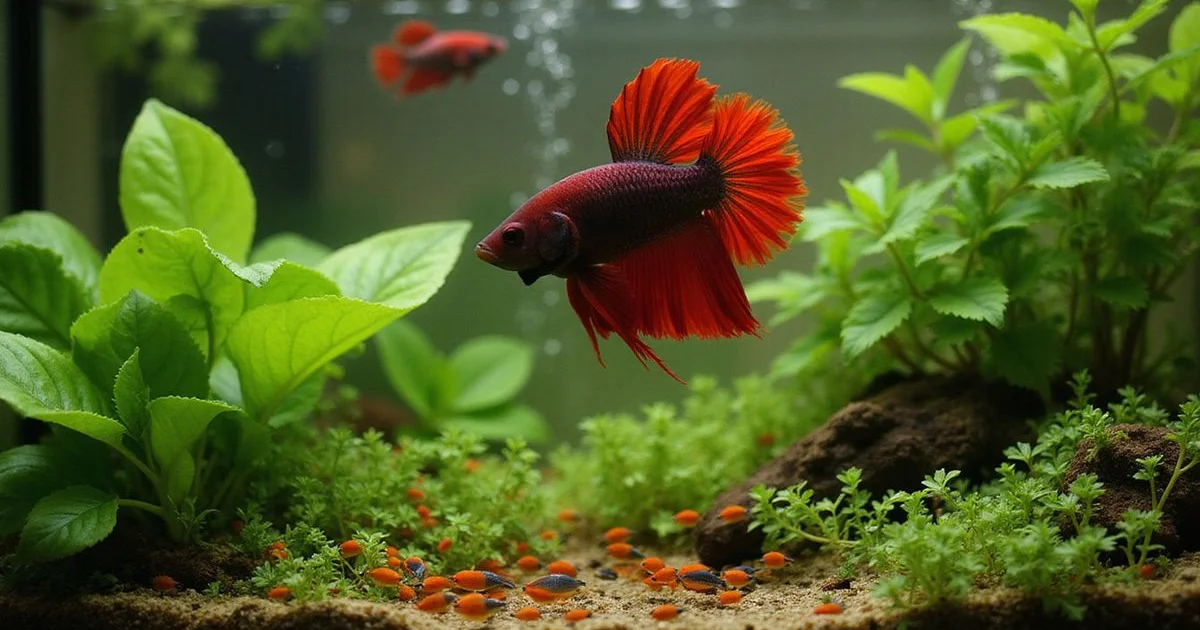
The honest disclaimer on betta tank mates
We completely understand that setting up a peaceful betta community tank often feels like an unpredictable gamble. Individual fish personalities vary so wildly that official guidelines rarely cover every scenario. Browse the bettas we have in stock — every one quarantined two weeks before sale so you start with a healthy fish. And if you are still tempted to use a small bowl, read our betta tank size guide first, because tank size is the single biggest factor in whether tank mates will work at all.
A 2021 study published in Applied Animal Behaviour Science actually found that bright lights and mirror-like glass trigger aggression just as much as other fish, meaning the environment is often the real problem.
Our standard advice for US homeowners and business owners is to expect a wide spectrum of risk. Some fish tolerate company for years. Others will attack anything new on the very first day.
We always tell clients there is no perfectly safe pairing. You only have lower risk and high risk choices. The guide below outlines the realistic spectrum from setups that almost always work to those that fail, so you can build a stable community from day one.
Betta tank mates that almost always work
Our top recommendations for a peaceful setup feature minimal risk in a planted tank of at least 10 gallons. These invertebrates simply mind their own business. They lack bright colors or flowing fins that might trigger a territorial attack.
We use specific snails and shrimp to build out a reliable cleanup crew. You just need to ensure the tank has plenty of hiding spots. A dense canopy of live plants works beautifully to break up sight lines.
- Nerite snails (zebra, horned, tiger): These snails provide zero aggression and cannot breed in freshwater. A recent 2026 aquarist report notes you can safely stock one nerite per five gallons to clear diatoms off standard US glass.
- Mystery snails (Pomacea bridgesii): These scavengers grow up to two inches across. Bettas ignore them because of their size and their incredibly calm pace around the tank.
- Amano shrimp (Caridina multidentata): These peaceful algae eaters grow large enough to deter most aggressive behavior. They happily clear out stubborn hair algae and biofilm.
Usually works in 15+ gallons
We find that stepping up to a 15-gallon or 20-gallon tank opens the door for small schooling fish. These species usually coexist peacefully. Success requires the right footprint and a relatively calm betta.
Our local clients often wonder what fish go with bettas in slightly larger setups. The key is choosing fast swimmers that stick to the bottom or middle layers. This keeps them completely out of the top water zone.
- Ember tetras: These small fish stay in the middle water column. Their dull orange color rarely threatens highly visual fighters.
- Kuhli loaches: These eel-like bottom dwellers hide heavily during the day. A betta simply cannot see them after the lights go out.
- Pygmy corydoras (Corydoras pygmaeus): These tiny catfish max out at one inch and need cooler temperatures between 72 and 78 degrees Fahrenheit. A school of six or more stays right on the substrate.
- Otocinclus: This small catfish maintains a very low profile. It peacefully grazes on green dust algae without drawing any unwanted attention.
We strongly advise testing all new additions in a quarantine tank first. Place the container near the main display. If the resident fish flares hard through the glass, you should cancel the pairing.
Sometimes works (high variance)
Our experience shows that certain pairings carry a much higher variance of success. The outcome depends entirely on the individual fish. You must monitor these specific combinations very closely during the first few weeks.
We classify these options as moderate risks for any standard US aquarium. A heavily planted layout improves the odds of survival. Extra space also diffuses territorial tension.
- Neocaridina cherry shrimp: Many fish eat them instantly. Some ignore them entirely. They are highly risky in tanks under 15 gallons, but heavy plant cover helps them survive and breed.
- Harlequin rasboras: These fish are peaceful but slightly more visible than embers. They need schools of six to ten and can grow up to two inches.
- Corydoras (full-size): These peaceful bottom feeders take up more space. Some fighters tolerate them, while others harass them relentlessly.
Our staff recommends having a backup plan if you try these specific species. A cheap breeder box works perfectly for a quick separation. You can easily move the aggressor out of the main area.
Almost never works
We completely avoid certain fish because they present a massive safety hazard. These red flags usually end in serious injury. The biological triggers are simply too strong to overcome.
Our service team frequently gets called to fix aggressive community disasters. Many popular pet store fish fall into this dangerous category. You must actively avoid the following choices.
- Other male bettas: They will fight to the death. You can never house them together.
- Female bettas with male: Cohabitation rarely succeeds long-term. This combination only works in highly controlled breeding scenarios.
- Tiger barbs and other fin-nippers: These fast swimmers will shred flowing fins. They cause extreme stress and physical damage.
- Brightly colored or long-finned fish: Guppies, fancy male endlers, and gouramis all resemble rivals. The resident fish will perceive them as direct threats.
- Goldfish: They require drastically different conditions. Goldfish need cooler water between 65 and 72 degrees Fahrenheit, while tropical fish need 76 to 82 degrees.
We strictly enforce this separation rule across all our managed properties. The risk of a fatal encounter is practically guaranteed. A peaceful display requires making smart stocking choices from the start.
Tank size matters
Our aquarists base all stocking recommendations on the actual footprint of the tank. A standard 5-gallon tank is strictly a one-fish home plus snails. A 10-gallon setup adds interesting shrimp possibilities.
We enforce a strict 15 to 20-gallon minimum before adding small schooling fish. A standard US 20-gallon long tank measures 30 inches across. This specific width provides excellent horizontal swimming space.
The Benefit of More Space
Our team always encourages homeowners to buy the largest footprint their space allows. The bigger the tank, the more distinct territories it contains. Extra hiding spots naturally reduce tension across the whole ecosystem.
| Tank Size (US Gallons) | Standard Dimensions | Safe Tank Mates |
|---|---|---|
| 5 Gallon | 16” x 8” x 10” | One fish, Nerite or Mystery Snails |
| 10 Gallon | 20” x 10” x 12” | Snails, Amano Shrimp |
| 20 Gallon Long | 30” x 12” x 12” | Snails, Shrimp, Pygmy Corydoras, Tetras |
What to do if it fails
We always prepare a solid backup plan before introducing any new livestock. You should keep a small spare tank running with a simple sponge filter. A basic 2.5-gallon hospital tank works perfectly for emergencies.
Our emergency protocol requires separating distressed fish within hours, not days. If a tank mate is being chased relentlessly, waiting will only lead to disaster. Bring the displaced fish right back to the store so you can swap it out.
Emergency Relocation Steps
- Set up a small backup container or breeder box.
- Move the aggressor immediately to prevent further injury.
- Monitor the remaining fish for signs of stress or disease.
We gladly help clients rehome incompatible species. You can simply return the aggressor and pick a calmer replacement. A peaceful community should never require constant stressful monitoring.
When to come in
Our facility houses stock in real tanks before sale so you can observe their actual behavior. The personality you see at the store is much closer to what you will get at home. A stressed fish in a tiny cup rarely shows its true colors.
We can pair you with calmer males or recommend a more peaceful temperament if you have a community planned. The free setup consultation covers tank-mate vetting before you commit to a purchase. This upfront planning prevents costly mistakes down the line.
Our goal is to help you build a beautiful aquatic display without the headache. Check your local water parameters and reach out today. Your perfect setup with the ideal betta tank mates is just a quick visit away.